

Vol. 19. September 1, 2021
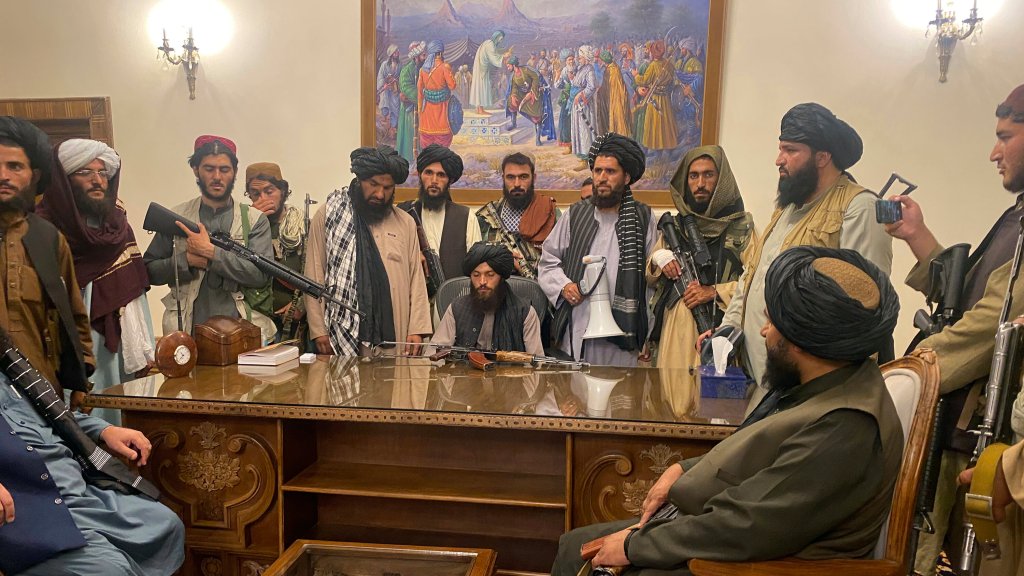
The Taliban takeover of Afghanistan came faster than anyone expected. Elapsed time from the fall of the first provincial capital to the cave-in of Kabul was 9 days flat.
Why did Afghanistan collapse so quickly, like a house of cards?
Endemic corruption, a long history of dependence on foreign assistance and feeble roots in democratic government.
Despite 2400 American deaths, 2 trillion dollars in aid and 20 years of effort, America planted its seeds of democracy on rocky soil.
As Jesus said, “When the sun came up, the plants were scorched, and they withered because they had no root.” Mt 13.6
Afghan people, especially women and girls, cower in fear, facing an uncertain future. Will the new leadership govern with the dignity and holiness of the human person uppermost in their minds? Probably not.
Taliban commandeer Waheedullah Hashimi declared on August 18 — three days after the Islamic militant group swept the country — “There will be no democracy. We will not discuss what type of political system we should apply in Afghanistan because it is clear: It is sharia law and that is it.”
A chilling assessment, coming from a notorious regime.
Freedom is not valued by the Taliban, unlike America.
But what is freedom?
From a Buddhist perspective, we find a vision of freedom spelled out in the Puggala-Pannatti (“Designation of Human Types”).
“Cramping is the household life, a dusty path! Open and wide is the path of renunciation! The monk is chaste, refraining from sexual life. He rejoices in unity. He does not cause disunity.
“He is satisfied with clothes just enough to protect his body, with alms just enough to feed his stomach. He tortures neither himself, nor others. In this world he abides without yearning or desire.
“At peace, enjoying bliss, he lives with a self become god-like. He acts mindfully whether chewing or swallowing, sitting or standing — the Happiness which is Blameless!”
Ignorance
Ignorance is the mistake at the heart of life.
We think we’re happy when we have power and material wealth. We think we’re happy when we attach to life.
Attachment causes suffering.
One need not be a monk to be happy. One needs freedom.
Sink your roots deeply into freedom — freedom from desire.
If you desire nirvana, you’ll never find it.
Let go and nirvana will find you.
Even in Afghanistan.
 The Buddha Times
The famous business scholar Peter Drucker once said, “culture eats strategy for breakfast”. Sadly, the tradition of this primary crossroads of Central Asia has played victim to one conqueror after another. At what point will the Pashtuns, Tajiks, Hazaras, Uzbeks, Turkmen, Aimak, Pashayi, Baloch, Pamiris, Nuristanis finally be able to unify under their own banner, a banner they once held for a short time in the 18th Century and a brief time in the 1970s.
LikeLike