The Buddha on St Patrick’s Day

Volume 61. March 17, 2025
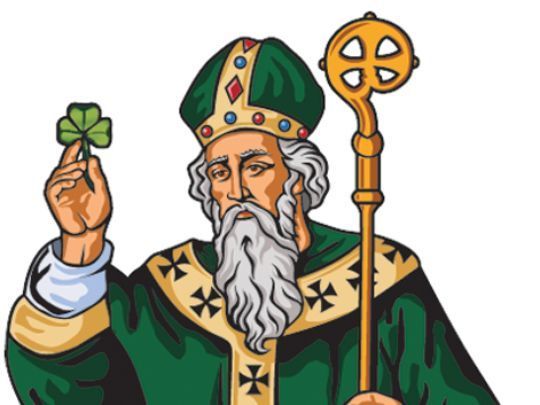
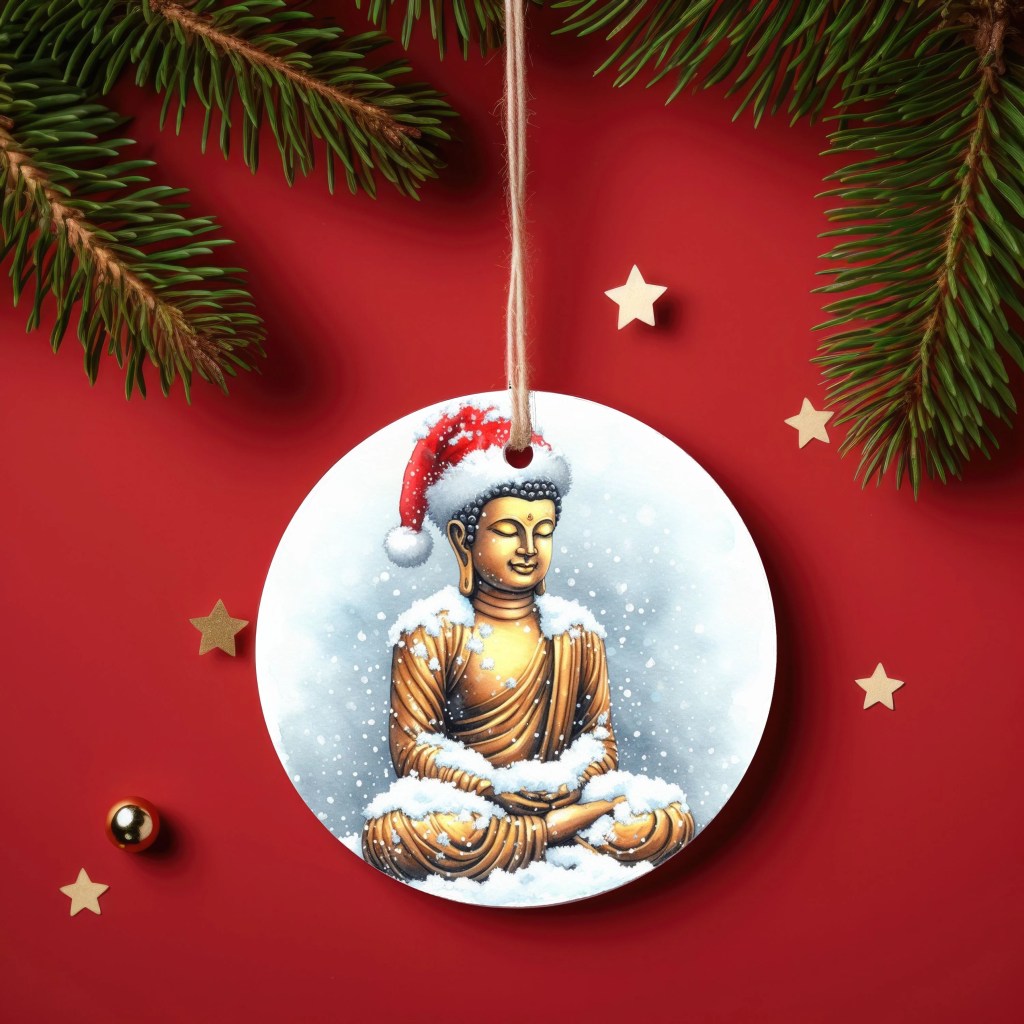
Ever since St Patrick held up a shamrock and explained that God was a Holy Trinity — three aspects of being in one Holy Person — the Irish people have been close to the divine.

Perhaps a story may illustrate.

Years ago, a young man toured the major cathedrals of Europe. Invariably, inside each historic Gothic church, he saw a golden telephone enthroned on a short marble pillar. Near the phone was a sign that read: “Direct line to God. $1000 per call.”

France, Germany, Spain, Italy, England — every major cathedral across Europe featured the same golden phone and the same sign.

Then the young man traveled to the Emerald Isle. Again, he saw the golden phone mounted on the marble pillar. This time, however, the sign read: “Direct line to God. 25 cents per call.”

Curious, he asked the Irish priest why this phone was so cheap.

The priest explained, “In Ireland, it’s a local call.”

Irish Catholics believe God has made his home right beside us.

Because of his great love, God the Father in Heaven not only sent His Son to Earth to teach us, but God also dwells in our hearts, guiding our lives through the presence of His Holy Spirit.

Oddly enough, Mahayana Buddhists believe the same thing.

According to the tri-kaya (“three body”) system, the Holy Person of the Buddha has three aspects to his one infinite being.

The Nirmana-kaya is the “emanation body.” Like Jesus Christ, the Buddha temporarily appeared on Earth to teach humanity the path to salvation. The Buddha was a historical man called Shakyamuni.

The Sambhoga-kaya is the “bliss body.” Like God the Father, the Buddha also dwells permanently in heaven as a deity. In fact, there are five Buddha gods living in five Buddha heavens: one for each quadrant of the universe, and one for the center of the universe.

The Dharma-kaya is the “body of great order.” This is the true body of all Buddhas. This body is co-extensive with all matter and co-temporaneus with all time. Our space-time continuum is the Buddha, in his body of great order.
Seekers of religious wisdom use the tri-kaya system to explain how the divine can walk among us as a man, dwell in heaven as a god, and yet be the totality of existence all at the same time.

But why stop there? Apply the tri-kaya system to yourself.

The Nirmana-kaya is what you do — compassion.

The Sambhoga-kaya is what you know — prajna.

The Dharma-kaya is what you are — thusness.

When you act selflessly and understand your nature as emptiness, you become the totality of existence.

Without even resorting to Irish whiskey.

God love him! St Patrick sure did pack a lot of wisdom into that one little shamrock.
Valentine’s Day Blues

Volume 60. February 14, 2025

American rock duo The Everly Brothers once sang:

Bye-bye love. Bye-bye happiness.

Hello loneliness. I think I’m gonna cry.

Bye-bye love. Bye-bye sweet caress.

Hello emptiness. I feel like I could die.

If you did not receive a Valentine this year, if you felt a twinge of anguish by not reading the words Be Mine, please take heart.

You have experienced the Buddha’s First Truth: All life is suffering.

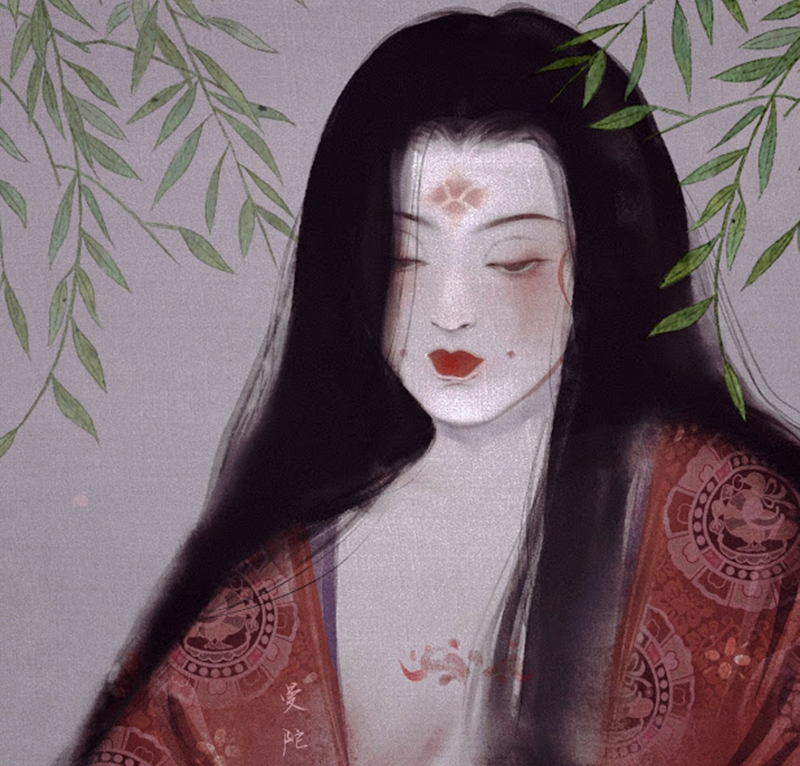
Heartbreak is an especially painful form of suffering. No one knew that pain worse than the Tang emperor of China, Hsuan Tsung.

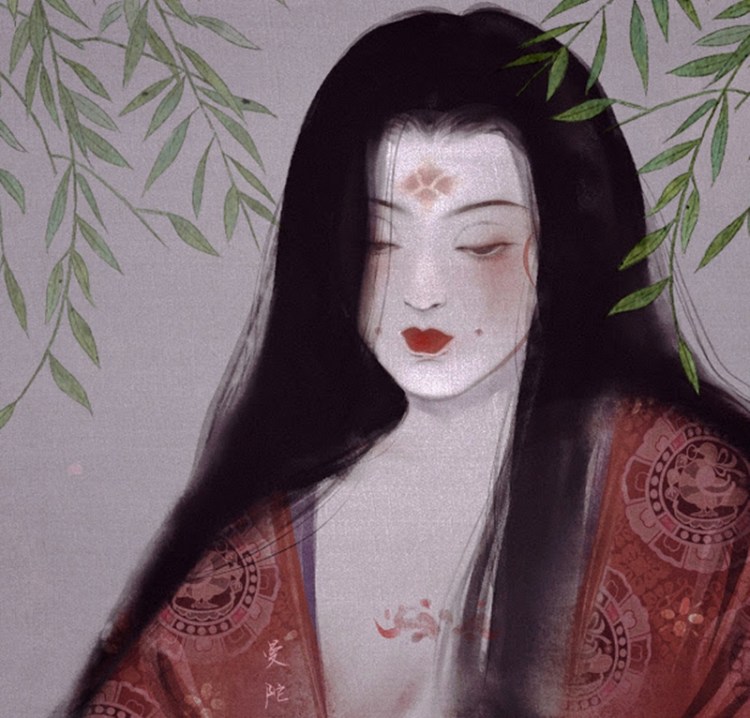
During his later years, he fell in love with a very beautiful woman. He was first smitten on seeing her emerge from a warm bath.

The dramatic tale of their moving romance is related in the poem “The Song of Everlasting Sorrow.” A verse:

The emperor neglected the world from that moment.

He lavished his time on her in endless enjoyment.

She was his springtime mistress, and his midnight tyrant.

He could never stop himself from gazing at her.

During the An Lushan Rebellion, however, the emperor and his court were forced to flee from the capital. The emperor’s guards demanded that he put his consort, Lady Yang, to death because they blamed the rebellion on her family.

The emperor capitulated and reluctantly ordered his attendant to supervise her forced suicide. Hsuan Tsung was devastated.

The last line of poem sings poignantly:

Earth fades, Heaven fades, at the end of days.

But Everlasting Sorrow endures always.

Weep not, oh lonely potato! Lament no longer!

Your black dog’s barking. You’re singing the blues. The light of love has gone out. But there is hope in this cruel world. Darkness is not your friend. Take consolation in Buddhist philosophy.

Lady Yang’s bewitching face emerging from a hot bath is no different from your face or my face.

We are all imaginary flowers in the air, for we all are empty.

Your life is my life for all life is the Dharmakaya.

The Dharmakaya is the only reality. All else is dream-puffs.

Behold the empty ocean. Gulp it greedily like a fish!

Life is an only dream. Come now, Dreamer, awake!

Nothing compares with the mighty sweetness of the Buddha’s big blank mind.

When we want, we lose. When we lose, we suffer.

Cease selfish wanting! Live in the freedom of egoless-ness.

Join your voice with The Everly Brothers. Sing, “Hello, emptiness!”

Embrace this core Buddhist concept. End your dreamlike sorrow.

And — awake — begin your true life as a Buddha.

Democratic Power Outage

Volume 59. January 18, 2025

American scholar Joseph Campbell once wrote, “Politics is the art of gaining power over men.”

Elbowed out of office, Democrats are feeling pretty low these days.

As Republicans gleefully assume control over the three branches of federal government (legislative, judicial, executive), and as Donald Trump gleefully resumes his three ring circus of corruption, cruelty and chaos, depressed Democrats need encouragement.

How can Buddhism help the Blue Team? Perhaps, with a story.

One day, Sojitsu, an outstanding monk, was assigned head priest of a rundown old temple. Conditions there were very difficult.

Leaking roofs. Sodden floors. The temple was so poor no smoke was seen rising from the cooking fire for days on end.

Temple rats were so hungry they were reduced to gnawing on their own entrails. At night, the gods of poverty howled.

When his sympathetic brother monks heard the news, they felt sad and angry. They furrowed their brows and grumbled.

Finally, they complained to their master saying:

“Master, our brother is a true Zen hero. We were sure he would receive a top post at some great monastery. He was going to make his mark on the world. What a disappointment you assigned him to that old temple. What a waste to throw a man of such talent into a weed patch like that! It’s worse than sending an innocent man into exile on a remote island. It brings tears to our eyes just to think about it. You might as well toss him into a pile of rubbish. Your decision greatly dispirits us. Master, you alone seem to rejoice in this appointment. Why?”

The Zen master replied, “Let Sojitsu explain.”

The monks visited Sojitsu at his rundown temple. He seemed quite happy, not angry at all. Puzzled, they asked why he had accepted such a degraded position.

Sojitsu said, “I have always held with the deepest regard the great kindness and compassion my master has regularly bestowed on me. If he had told me to live among barbarians or man-eating demons, how could I have refused him?”

The monks pressed their palms together and bowed. The End.

What’s the moral of the story? One word, humility.

Humility is a lack of pride, arrogance, swagger. It takes a special person to remain humble in the face of honor or dishonor.

Bodhisattvas are enlightened beings. They have perfected the virtue of humility. Bodhisattvas are not attached to their egos. Bodhisattvas realize their true self is the No-self.

Anyone cast out into the wilderness, wincing at a painful loss of power and prestige, like a depressed Democrat today, faces a tough test of their spiritual mettle.

If you’re here to gain power over men, you’re on the wrong path.

If you’re here to humbly help others, you’re on the path to enlightenment.

The Buddha’s Holiday Gift-giving Guide

Volume 58. December 17, 2024

Celebrated diarist Anne Frank once wrote, “No one has ever become poor from giving.”

With that attitude in mind, let’s run through the Buddha’s Holiday Gift-giving Guide. And what better way to begin than with a story.

One day the head priest of a Zen temple in medieval Japan asked his master for a small gift — just a short verse that would inspire students long into the future.

The Zen master licked his brush tip and wrote the following:

“There is in this great universe a treasure of incalculable worth. Anyone who gets hold of it will become a person of enormous happiness, prosperity and wisdom.

“But if this treasure eludes him, then even if he is a king, a prince, a nobleman, or a person of immense wealth, he will remain a base, poor, ignorant fellow.”

What an inspiring verse!

As the story suggests, meditation is the Great Free Treasure. It enriches all, it’s designed for everyone and it costs nothing.

The Great Free Treasure is the perfect gift for that spiritual cheapskate on your list who prefers inexpensive gifts.

For the ambitious overachiever, for that special someone who strives for spiritual greatness, go deluxe. Wrap up for that eager beaver the Zen Master’s Agenda:

1. Lead all beings to salvation.

2. Create a Buddha-land on earth.

3. Acquire the deportment of a bodhisattva.

4. Store up great Dharma assets.

5. Preach the Dharma unflaggingly to benefit sentient beings.

Most people on your list, however, will probably fall somewhere between a spiritual skinflint and a Buddhist billionaire. For those moderate seekers, the ideal stocking stuffer is the Middle Way.

The humble practice of morality, meditation and wisdom is sure to warm the heart of almost any spiritual aspirant.

To finish our story. After the Zen master handed the head priest the inspiring verse, the master complimented the priest that he had indeed acquired the Great Free Treasure.

But the master warned him, “If you become satisfied with that accomplishment, sleeping comfortably, resting on your laurels, thinking only of yourself, looking down your nose at others, you will be as vilified as a muck worm wriggling in the mud.”

The End.

What’s the moral of the story?

Once acquired, the gift of Buddhism is not something we sit on.

We don’t become complacent. We give it to others.

Best of all, we don’t become poor from giving.

Merry Christmas!

Bro World Cheers Their Once and Future King

Volume 57. November 10, 2024

Trump supporters are in hog heaven.

Kinder and gentler is out. Ruder and cruder is in. Women are out. Men are in. Like James Brown, the godfather of soul, once sang, “This is a man’s world.”

Ever since the dawn of the Iron Age, ever since about 3500 BCE, ever since the Mother Goddess was demoted and the Father God was elevated, it’s been a man’s world.

In a victory for the history books, Donald Trump staged a comeback not seen in American history since Grover Cleveland won a second non-consecutive term in 1892.

Apparently, Donald Trump is a superhero. He’s indestructible. America likes heroes. Problem is, Trump is an anti-hero.

He stands up for what most people detest: misogyny, lying, selfishness, bullying, white supremacy. Repellent to the core, Trump is a far cry from the Buddhist ideal of compassion.

In Mahayana Buddhism, the quality of compassion is localized not in the Buddha, but in the Bodhisattva of Compassion.

She goes by various names. In China, she is Guan Yin. In Japan, she is Kannon. In Vietnam, she is Quan Âm.

Although she started out in India as a man (Padma-pani) and is formally known as Avalokiteshvara (“the lord who looks down”), the bodhisattva is usually depicted in feminine form because compassion is understood to be a psychologically feminine trait.

One story emphasizes her feminine dimension.

Once upon a time, the celestial Buddha Amitabaha vowed to save humanity. Since he was restricted to his heavenly abode of bliss, he sent his emissary of mercy to survey the world.

As his bodhisattva flew across the land, she heard the mournful moans of suffering souls and the pitiful groans of hungry people. As she looked down upon the world with the eyes of compassion, she felt a tear well up in her eye.

The tear splashed to earth, mixed with the soil and became Tara, an emanation of the Bodhisattva of Compassion.

Tara vowed always to be re-incarnated as a woman to heal the suffering of our land.

Perhaps, Tara has re-incarnated in you.

How does a wise person approach Trump’s recent victory?

Three ways: Morality, meditation and wisdom.

Treat others with kindness. Meditate. And have a little wisdom.

Realize that all things are impermanent, even Donald Trump.

Kamala Harris supporters may be fearing the Fourth Reich, while Donald Trump supporters are celebrating in hog heaven,

But recall what James Brown told us about our world:

“This is a man’s world, this is a man’s world. But it wouldn’t be nothing, nothing, without a woman or a girl.”

Amen

Election 2024

Volume 56. October 28, 2024

Perhaps the legendary American singer and songwriter Bob Dylan was thinking of Donald Trump when he sang sardonically, “Patriotism is the last refuge to which a scoundrel clings.” 

After three consecutive presidential elections, most Americans like Bob Dylan know the score on that dishonest, anti-democratic demagogue and 34-time convicted felon Donald Trump. 

But lest we forget what a second Trump administration would look like, let’s keep in mind the chaos of the first. 

The Washington Post kept a running count of the lies Trump told during his White House tenure. His total tally of false claims amounted to 30,573. That’s 21 lies per day everyday for four years. 

Does anyone really want to be misled like that again? 

Perhaps Bob Dylan was thinking of the bedlam of a second Trump administration when he added: “Freedom just around the corner for you. But with truth so far off, what good would it do?”

America is the home of the free. Here we are free to play football. Well, Election 2024 is analogous to a football game. 

Before the game, the field is at peace. We behold green grass. Silent seats. Tranquility. Harmony. Unity. Nirvana.

During the game, there is polarity, division and contention. 

Two opposing teams clash, advance the ball through enemy territory and fight for touchdowns. All the while, thunderous fans roar like jet engines for a victory over enemies. Samsara. 

After the game, the peace returns. 

As we suit up for Election Day 2024, we need to put on the helmet of right thoughts. We need to turn samsara into nirvana. 

How so? Practice morality, meditation and wisdom.

Our goal should not be victory over enemies. 

Our goal should be the path of peace.

American Buddhist Jack Kerouac (1922-1969) once wrote: “In a swirling storm of emotions, different goals and opposing lives,    the solution is obvious: Take the goalless path of the Buddha.” 

That’s sound advice. 

With inescapable advertising, constant news coverage, and incessant bombardments of balderdash, our minds are unable to contemplate clearly the complete beauty of the Dharmakaya. 

Now is the time to meditate. Now is the time to show compassion. Now is the time to realize that all people are equally loved, all people are equally empty and all people are becoming Buddhas. 

Patriotism might be the last refuge to which a scoundrel clings. 

But peace is the path to which a Buddha clings. 

There’s a beautiful world out there. 

Slow down. Breathe. Enjoy it.

See you on the path of peace.

HAPPY MID-AUTUMN FESTIVAL!

VOLUME 55. SEPTEMBER 17, 2024

Once upon a time, an archer loved his beautiful wife. She was bothered by the unbearable heat of ten suns scorching the land. 

So, the archer shot down nine of them. For his meritorious deed, Heaven rewarded him with the elixir of immortality. 

The archer’s wife, however, mistakenly consumed the elixir.

She became weightless. She floated skyward. 

She couldn’t bear to be without her husband. So, to be close to her beloved, she chose the Moon for her immortal home. 

When the archer discovered what happened, he felt responsible. Missing her dearly, he longed to get a glimpse of her. 

So, in September, when the moon was at her fullest, he offered fruits and small cakes to her pale white radiance. Sitting there quietly in the moonbeams, he felt her love once again. 

The End

This delightful and romantic legend of the moon goddess hails from China and inspires people all over Asia to celebrate the beauty of this time of year. 

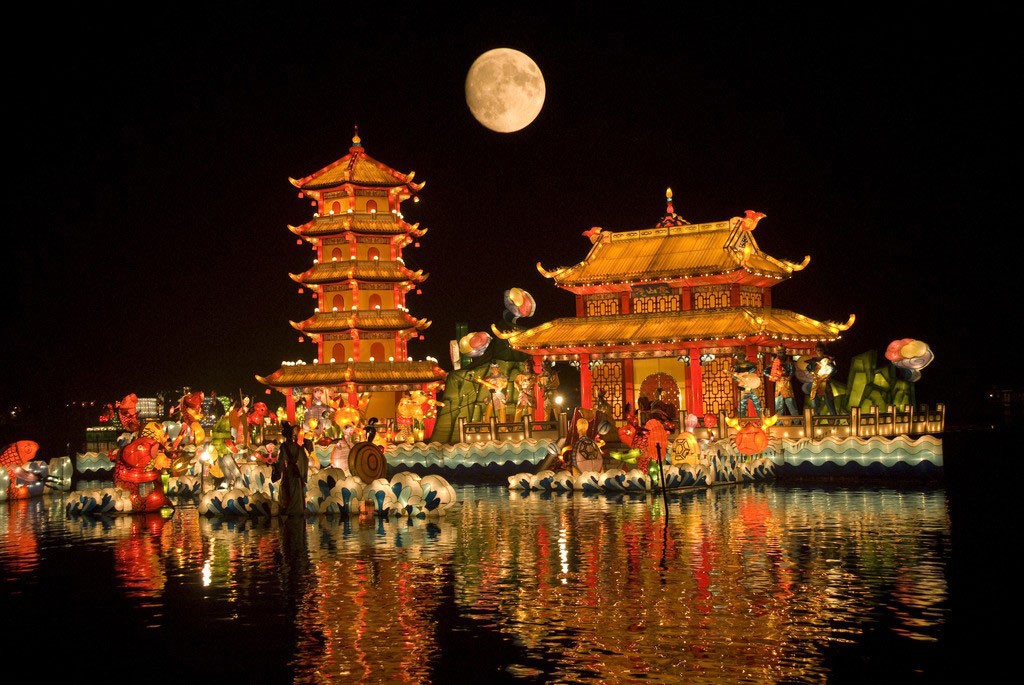
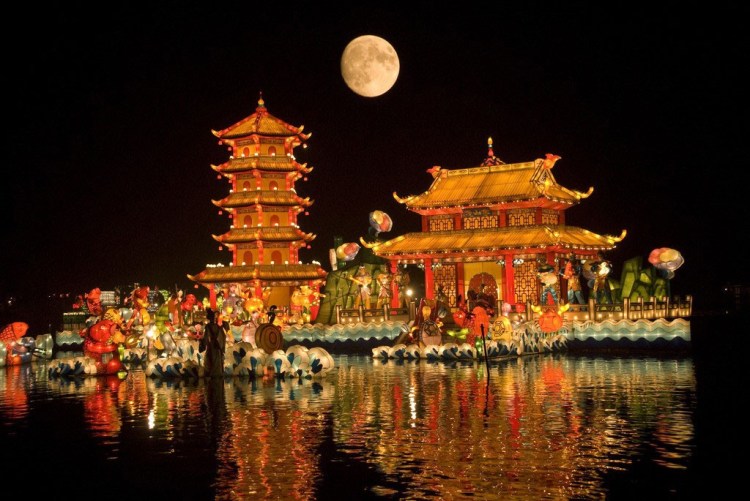
The full moon of September marks the Mid-Autumn Festival. 

This ancient harvest holiday features husbands, wives and children coming together and, as families, feasting on the star of any Mid-Autumn Festival, a calorie-packed pastry called the moon cake. 

There’s nothing Buddhist at all about the Mid-Autumn Festival, but the beauty of the moon once inspired the Buddha himself. 

When trying to put the Wordless into words, the Buddha uttered a memorable metaphor: “I’m just a finger pointing at the moon.” 

In other words, Buddhist wisdom, philosophy and ethics are fine, but they don’t constitute enlightenment. 

The true Dharma is beyond words, beyond thoughts. 

It’s right here and right now. Accessible at any moment. 

Behold the beauty of the moon.

In old China, Zen master Huang-po (d.866) intuited this truth. Enlightenment is not found in doctrines, but in Thusness.     

Huang-po phrased it this way: 

“All this talk of Bodhi, Nirvana, the Absolute, Buddha-nature, Mahayana, Theravada, Bodhisattvas and so on is like mistaking autumn leaves for gold.” 

The true nature of all things is a perfect Oneness. When we sit in silent meditation, we experience this tranquil unity. Intangible yet within our grasp, the true Dharma is always before us.

Huang-po lamented, “Ah, this Dharma of Thusness — until now so few people have come to understand it.” 

So few people, except for one who sits quietly in the moonlight and munches mindfully on a mooncake. 

Biden’s Gracious Bow

Volume 54. August 3, 2024

On July 21, 2024, after a tortuous decision, President Joe Biden graciously bowed out of his reelection campaign.

He announced, “I’ve decided the best way forward is to pass the torch to a new generation.”

What a lesson in humility!

Imagine being the most powerful person on the planet, then voluntarily, on your own free will, giving up all that power.

Most mortals could not do it. Most would kick and scream. Some might even incite an insurrection and unleash a murderous mob to hold on to presidential power.

There is no force more tenacious than one’s ego. The tornado of personal desire can obliterate anything in its path.

Yet, Buddhism believes there is no ego. Buddhism urges us to let go of ego-desires and replace them with selfless compassion.

This aspiration to redirect selfish behavior is beautifully expressed in an old Tibetan verse:

Whenever I am with others, I will see myself as the lowest of all and, from the depths of my heart, respect them as the highest.”

Such a noble sentiment obviously is difficult to put into practice.

But many centuries ago a Tibetan monk gave it a try.

One day, Geshe Ben was sitting in a large gathering of disciples. During a break in the proceedings, yogurt was offered to the guests. Geshe Ben, sitting in the middle, noticed how much yogurt the guests in the first row were taking.

The hungry monk wondered whether he would get his fair share.

Suddenly, realizing his self-centered thoughts, he reprimanded himself. “You yogurt addict!” He turned his bowl upside down.

When the yogurt finally came round to him, he refused saying, “My bad thoughts have already taken their share.”

Whether it be yogurt or ultimate global power, egotistical desires cause needless suffering for ourselves and other people.

For peace of mind, we need to let them go.

It takes wisdom to understand the principle of egoless-ness.

It takes humility to put it into action.

Yet, when we let go of our ego, we gain a new perspective. We see that all life, all things, indeed all people are really interconnected.

We are all in this together.

Joe Biden phrased the Buddhist wisdom of interconnectedness this way:

“It’s not about me. It’s about you, your families, your futures. It’s about we the people, and we can never forget that.”

President Joe Biden, in a Sunday stand down that astonished the nation, displayed the Buddhist ability to let go.

Joe Biden had the humility to pass the torch to a new generation.

Do you?

Happy Fourth of July Buddha-style

Volume 53. July 4, 2024

Happy birthday, America! It’s time to celebrate.

Founding Father John Adams thought Independence Day should be celebrated “with Pomp and Parade, with Shows, Games, Sports, Bells, Bonfires and Illuminations from one End of this Continent to the other.”

He didn’t mention music, but that hasn’t stopped songwriters.

Even classic rock ’n rollers sing patriotic anthems.

Bruce Springsteen belts out, “Born in the USA!”

John Mellencamp wails, “Ain’t that America for you and me.”

John Fogerty hollers, “Some folks are born made to wave the flag. Hoo, they’re red, white and blue.”

Birthdays are important. They mark milestones of time and progress.

How does one celebrate the historical Buddha’s birthday?

Japanese Zen Master Hakuin (d. 1769) lit some incense.

Bowing, he offered it to the Buddha statue in his temple shrine, then he turned to the assembly and gave these instructions:

There’s a young fellow in my house. He’s got no face at all.

A dark little boy from India. We’re celebrating his birthday.

He’s a strapping lad. He’s noble and very strong.

But if you start thinking about him, he’s gone in a flash.

In art, the historical Buddha is depicted as the perfect man, with 32 characteristic marks, like blue-black hair, and 80 minor marks of physical excellence.

He’s superior to people, possessed of great strength and ability.

In truth, this depiction is misleading.

Buddhist wisdom teaches that whatever has form, whatever our senses can apprehend, resembles an illusion.

The 32 signs and 80 excellencies belong to the sphere of matter. Material forms are illusions. The Buddha has no face.

Because the Buddha has no face, if you try to approach him through forms or concepts, he slips beyond your reach and is gone.

Rather, we behold the Buddha in meditation.

When we let things be, when we rest in tranquility, when we set aside conceptual thinking, the Buddha is there.

Once you reach the age of 248, like America does today, you begin to consider estate planning. What should I leave my descendants?

Money? They will only squander it.

Books? They will never read them.

A far better legacy is a model of virtuous behavior.

Secretly increase your practice of morality, meditation and wisdom.

That’s a gift that will last forever.

That’s also something your loved ones will celebrate with Bonfires and Illuminations from one End of this Continent to the other.

Why Do You Have To Lie?

Volume 52. June 5, 2024

For the first time in American history, a former president of the United States has been found guilty (34 times!) of criminal activity. On May 30, 2024, Donald Trump became a convicted felon. 

In a rambling, incoherent speech the next morning, Trump spewed invective at the judge, the witnesses and the prosecutors. 

He displayed no contrition, no humility, no admission of guilt.

Only contempt, defiance and spite. 

Yet, he was able to reflect on his ignominious achievement. 

In a brief moment of clarity and rare introspection, he said, “Falsifying business records … that sounds so bad to me.” 

It sounds bad because it is bad.

Simply put, falsifying business records means not telling the truth. In a word, lying.  

The Buddha considered telling the truth so important that he included Right Speech as one facet of the Eightfold Path. 

In the Pali Canon, the historical Buddha defines Right Speech.  

He asks, “What is right speech? Abstain from lying, divisive talk and abusive rants. This is called right speech.”

He continues, “Speak words that do not torment or harm others. Speak only pleasant words.”

“Before you speak, reflect: Will my words hurt someone? Will I speak gently or harshly? Will I speak with a kind heart or with  inward malice?”

“While you are speaking, reflect: Are my words hurting someone? Am I speaking gently or harshly? Am I speaking with a kind heart or with inward malice?” 

“After you speak, reflect: Did my words hurt someone? Did I speak gently or harshly? Did I speak with a kind heart or with inward malice?”

“If your words have happy results, then you will be joyful.” 

Others will be joyful too.

Lying hurts people. It’s a sign of delusion and the desire to delude others. Right Speech means if you don’t have anything good to say, don’t say anything at all. 

In a grander sense, all words are lies. The Buddha came to this realization. The first words he spoke after enlightenment were: “This cannot be taught.”

To speak of it is to slander it. 

The Absolute cannot be conveyed in words. Yet, to help others reach enlightenment, he had to use deluding lies, that is, words.  

The Buddhist poet Ashvaghosha phrased the quandary this way: “We use words to get free of words until we get to the Wordless.” 

So, if we must use words, let’s use Right Speech. 

Then, all our verbal acts will be found not guilty.