Profile in Courage

Volume 49. March 13, 2024

Sometimes you get the bear. Sometimes the bear gets you.

On February 16, 2024, the bear got Alexi Navalny. After poking Putin for years, Russia’s most prominent dissident died while jailed in a penal colony near the Arctic Circle. He was 47.

History will remember him for one thing: Courage.

His ability to face fear put the Russian bear to shame.

After surviving a state-sponsored poisoning, Navalny could have remained a free man, alive and well with his wife and children in Germany. But he got on a plane and returned to Russia. He knew he was going to die there, but he returned anyway.

Like Jesus Christ or Martin Luther King Jr before him, he went to his own death willingly, for a higher purpose. He died so that his fellow brothers and sisters could live — live a better life.

In Buddhist terms, Navalny roared the Lion’s Roar.

On the morning of his enlightenment, the Buddha made the ultimate sacrifice. He roared the Lion’s Roar. He gave up his ego.

He declared the doctrine of an-atman. There is no permanent self.

The Lion’s Roar is a victory over death. The Buddha, through his Great Awakening, broke the hold death has on us. The Lion’s Roar is entering a state of egoless-ness.

The great question all humans face is: What do you identify yourself with? Your puny little ego or the brilliance of eternity?

When faced with death, when all else has failed us — doctors, family, friends, technology — we humans still cling to our egos.

How can I lose my sense of self? It created the person I am!

My ego will save me!

Buddhism says, let it go. That’s not the real you.

You can’t bring an ego into nirvana.

Vladimir Putin and Alexi Navalny are a study in contrasts.

One crushes freedom. The other cherished it.

One wants freedom for himself. The other wanted it for everyone.

One clings to his ego. The other let it go.

It takes courage to let life go. Bravery is part of the spiritual path.

The hallmark of a person who can roar the Lion’s Roar is courage. That person can act in the world but is no longer of the world.

An enlightened person knows the false self is karma enfleshed, while the true self is the No-Self.

The Lion’s Roar reigns supreme. It silences the howls and growls of lesser creatures. When a lion roars, other beasts listen.

Putin may have gotten Navalny today, but the human cry for freedom is irrepressible. Someday, it will get the Russian bear.
Be My Valentine on Ash Wednesday

Volume 48. February 6, 2024

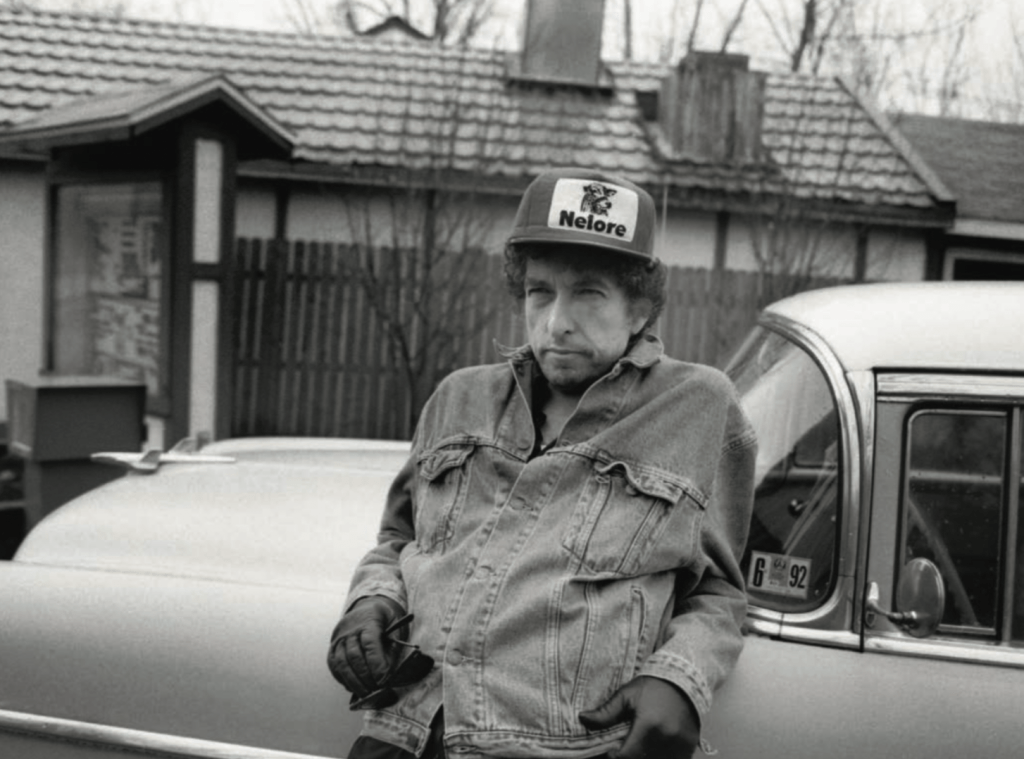
Bob Dylan is widely regarded as one of the greatest American songwriters ever. In 1997, Bob wrote this plaintive verse:

I’m your man. I’m trying to recover the sweet love that we knew.

You understand. My heart can’t go on beating without you.

Well, your loveliness has wounded me. I’m reeling from the blow.

I wish I knew what it was that keeps me loving you so.

Romantic love like that is celebrated on Valentine’s Day. This year, in a simple twist of fate, Valentine’s Day falls on Ash Wednesday. The contrast between the two events could not be more stark.

Ash Wednesday signals the beginning of Lent, a season of prayer, fasting and penance. Sorrowful sinners mark the day by getting dirty smudges of black ashes crossed over their foreheads.

How can we reconcile these opposites? The burning intensity of romantic love and the contrite abstinence of bodily pleasure?

Our old friend, the historical Buddha, faced the same dilemma.

Before his Great Awakening, the Buddha lived in the lap of luxury. He grew up as a royal prince in his father’s kingly palace. He was surrounded by every pleasure under heaven.

Eventually, the idle life of wine, women and song left him restless. He renounced the cushy life of affluence and searched for his destiny in the desolation of the forest.

For six long years, he lived a life strict deprivation. At one point his diet consisted of one grain of rice per day.

Eventually, he realized, “Asceticism is ridiculous. I am no farther along the spiritual path than I had been indulging in pleasure back at my father’s palace.”

The Buddha settled on the Middle Way. It dawned on him that spiritual salvation rests in the center point between the extremes of austerity and self-indulgence, fear and desire, individualism and the oblivion of ego-annihilation.

The Middle Way consists of three things: morality, meditation and wisdom.

When we treat others with kindness, meditate and realize nothing is permanent, not even our ego, we tune the strings of our guitar just right and strum the beautiful music of enlightenment.

At that point we can sing with Bob Dylan:

It’s mighty funny, but the end of time has just begun.

Oh honey, even after all these years you’re still the one.

On Valentine’s Day, you and your beloved become one.

On Ash Wednesday, we also become one. We drop our ego and realize that, ultimately, we are dust and unto dust we shall return.

A fundamental unity lies below distracting duality.

Fasting, abstinence, passion, intimacy —

All things are Buddha things because all things are one.

A World in White Gets Underway

Volume 47. January 10, 2024

Rock ’n roll heralds of calendrical beginnings U2 proclaimed immortal words of annual genesis, singing,

All is quiet on New Year’s Day.

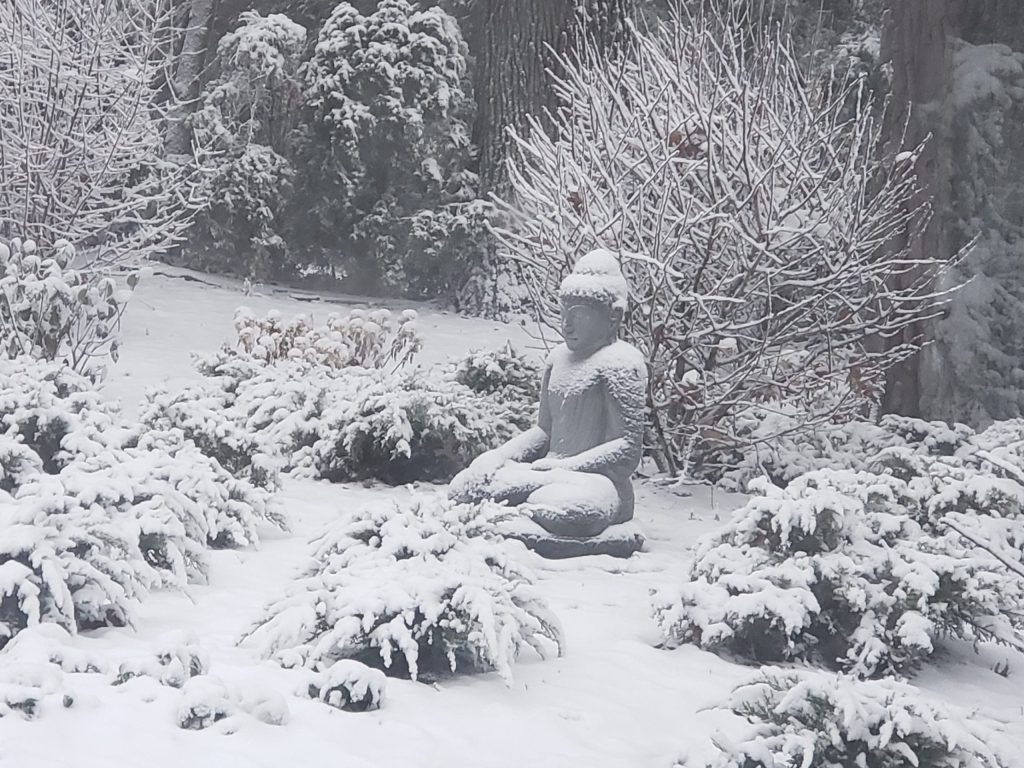
A world in white gets underway.

The new calendar year offers us a pristine state of clarity. Quiet. White. Tranquil. Serene. Fresh. Unspoiled.

New Year’s Day is a precious moment. Untouched by agendas, unsullied by appointments, unspoiled by assignments, the New Year offers us a moment of rest before the chaos ensues.

Buddhism offers us the same thing. Buddhism restores us to mint condition. Though torn in two by fear and desire, we can be one.

From hibernating frogs to hyperactive homebodies, we all need annual renewal. Buddhism offers us daily renewal. Nay, hourly renewal. Nay, nay, momentary renewal.

A fresh state of clarity awaits us every minute while we meditate.

The basis of Buddhism is meditation. Being a Buddha is not about seeking fame, accumulating wealth or grasping for power.

Being a Buddha is not even about doing good works, however excellent they may be in themselves.

Rather, Buddhism is about waking up. It’s about renouncing the error of conceptual thought. Being a Buddha boils down to experiencing thus-ness and constantly returning to it.

As ninth century Chinese Zen Master Huang Po once said,

“Let there be a silent understanding and no more.”

Huang Po embodied the dragon wisdom of Buddhism. Long ago, the future empire of China personally felt the claws and fangs of this Zen master at work.

Once upon a time, the future Son of Heaven visited Huang Po and saw the Zen master bowing before a Buddha statue.

Puzzled, he asked, “If you don’t seek anything from the Buddha, then why are you bowing?”

Huang Po replied, “I’m just paying my respects.”

The young man said, “What’s the use of paying respect?”

Immediately, Huang Po slapped him.

The young man yelled, “Oh! That’s too coarse.”

Huang Po said, “This is a Zen monastery! Imagine making distinctions between coarse and fine!” and slapped him again.

The mind in meditation is one. It does not make distinctions.

Return to a state of pristine clarity.

Let there be a silent understanding and no more.

The best time to empty the mind is right now.

All is quiet on New Year’s Day.

A world in white gets underway.

Winter Solstice Buddha-style

Volume 46. December 20, 2023

American singer and songwriter Frankie Laine (1913-2007) once sang about the laziness of our lucky old Sun.

Up in the morning, out on the job,

Work like the devil for my pay.

But that lucky old sun has got nothing to do

But roll around heaven all day.

Sorry, Frankie, but that lucky old Sun actually has something very important to do. On December 21, 2023, at 9:27 PM CST, the Sun needs to stand still.

The winter solstice is that time of the year when the Sun reaches its lowest point on the horizon and appears to stand still.

Astronomically, it’s the longest night of the year. Symbolically, it’s a triumph of light over darkness. Spiritually, it’s a time of renewal. Essentially, the winter solstice is a time to party!

Many cultures commemorate this celestial event, marking the promise of the Sun’s gradual return.

Christians celebrate Christmas. Neo-Pagans observe Yuletide. African-Americans salute the season with Kwanzaa. The ancient Romans whooped it up at the Saturnalia.

Buddhists get busy by sitting in the still point of meditation.

For inspiration, they look to their master. On the night before his enlightenment, the Buddha entered a deep meditation.

Just then Mara, the Lord of Death, unleashed an army from hell. Wild bull elephants, snarling tigers, monkeys throwing javelins. The temptation of fear.

The Buddha remained unmoved.

Mara then paraded his three lovely daughters before our hero in a sort of strip tease. The temptation of desire.

The Buddha remained unmoved.

Desire is running toward stuff. Fear is running away from stuff.

Enlightenment is the still point between those polar opposites.

Buddhas sit in the still point between fear and desire.

On the winter solstice, the Sun reaches a still point.

In the Northern Hemisphere, the winter solstice happens once a year. In Buddhism, the still point occurs every day.

So, on December 21, not only the lazy, lucky old Sun but all of us have something important to do. We need to be still.

Once we sit down, relax and breathe, we reach the still point.

Then, it doesn’t matter if we fuss with our family, toil for our kids or work like the devil for our pay.

Enlightened, we can roll around heaven all day.

Merry Christmas!

The Buddha Meets Thanksgiving

Volume 45. November 22, 2023

This Thanksgiving we got a lot to be grateful for. Perhaps the most important thing might be our Buddha-nature.

It is always there. But we tend to ignore it. We experience our Buddha-nature when we relax, go with the flow and let things be.

The greatest obstacle to experiencing Buddha-nature is that pesky automaton chattering away in our cranium: the rational mind.

Rational thoughts help us navigate through the complex world. Our lifestyle would be impossible without education.

But rational knowledge is only one type of knowledge. Above and beyond rational knowledge is intuitive knowledge.

Intuition is the only method by which Buddha-nature can be known. The intellect is not enough. We have to experience it.

How do we experience our Buddha-nature? Easy. Meditation. Zen. Develop a mind that rests on nothing whatsoever.

Hui-neng was a peasant in 7th century China. His father died when he was young. His family was so poor he could not attend school. He never learned to read or write. He supported his mother by selling firewood.

One day in the marketplace, he heard a monk reciting a passage from the Diamond Sutra. “Let your mind flow freely, without dwelling on anything at all.”

Immediately, Hui-neng became enlightened. He was just a kid. Later, he went on to become the Sixth Patriarch of the Zen school.

The point: Book learning takes you only so far. If a poor, illiterate peasant can achieve Buddhahood, where does that leave us?

Develop a mind that rests on nothing whatsoever.

That’s how Buddhas act.

When we sit down at the Thanksgiving table, pondering whether we should pile potatoes on the plate or perhaps more stuffing, remember one thing.

Develop a mind that rests on nothing whatsoever.

That’s how Buddhas act.

When we ponder powerful Israelis pounding poor Palestinians to dust in the desolate rubble of Gaza, remember one thing.

Develop a mind that rests on nothing whatsoever.

That’s how Buddhas act.

When we face our thoughts in meditation, remember one thing.

Develop a mind that rests on nothing whatsoever.

That’s how Buddhas act.

Only when our mind ceases to dwell on anything whatsoever will we come to a true experience of Buddha-nature.

And that’s something to be grateful for.

Was This Really Necessary?

Vol. 44. October 21, 2023

On October 7, Hamas, the Gaza-based militant group, invaded Israel. Innocent children, elderly and hundreds of young people at a music festival perished. Israeli Defense Forces retaliated, causing immense human suffering.

Israel is fighting a terrorist group. Conventional wisdom holds that there is no military solution to countering terrorism.

Spiritual wisdom holds that this entire situation is insane.

When will the madness end?

In this conflict, both sides have bloody hands. Neither side is blameless. Neither side has the moral high ground.

If one seeks upstanding moral action, one doesn’t look to animals.

Nothing is ethical in war except the instinct to survive.

Animals pursue violence. Buddhas pursue peace.

For upstanding moral action, one looks to the Blessed One.

One can almost hear the Buddha urging the warring parties to forgive one another.

Cast off the armor of war. Put on the helmet of right views.

Set down weapons. Pick up right mindfulness.

Stop fighting. Start right action.

Don’t declare war. Declare peace.

Fighting solves nothing.

Morality, meditation and wisdom solve everything.

The eightfold path is there for a reason: To end human suffering.

Buddhas see this conflict and realize people are afraid to die because they cling to an imaginary self that is going to die.

Desire for self causes suffering. We hang on tenaciously to what is ultimately unreal.

Human wisdom:

What are you? A Jew. A Palestinian.

What do you know? Self preservation.

What do you do? Fight to survive.

Buddhist wisdom:

What are you? Emptiness.

What do you know? Prajna.

What do you do? Compassionate action.

Buddhas are able to live in the world, act in the world, while still seeing the world as nirvana.

For people fighting in Israel and Gaza today, wisdom not war is necessary.

Let your actions abide in samsara, but your intentions abide in nirvana.

Peace be with you.

Autumn is a Time of Return

Vol. 43. September 20, 2023

As summer draws to a close, autumn is a time of return.

Children return to school. Songbirds return to warmer climates. TV stations return to their fall schedules. Return is natural.

Even in a galaxy far, far away, there was The Return of the Jedi.

Did the Jedi read the Tao Te Ching? It teaches the spiritual wisdom of return. Chapter 40 says, “Returning is the motion of the Tao. Yielding is the way of the Tao.”

To put ourselves in harmony with the Great Tao, we need to return to a state of simplicity.

Uncomplicated. Unpretentious. Natural. Quiet. Pure. Innocent. Ordinary, like an uncarved block.

In Buddhism, we arrive at this state of simplicity when we meditate, clear our minds and return to Holy Thus-ness. Buddhism is a return to the Original Mind.

Perhaps a story may illustrate.

One day a student came to Hui-neng, the sixth patriarch of the Zen school. He said, “Please teach me the Dharma.”

Hui-neng said, “Relax. Sit down. Meditate. Do not give rise to a single thought. Then I will teach you.”

The student calmed down. He cleared his mind.

Then Huineng said, “When you are thinking of neither good nor evil, what at that moment is your original face?”

The student felt thunderstruck. The dark clouds of dualistic thinking were blown away by the winds of wisdom.

The moral: Nothing can separate us from the Original Mind, except our free will.

American Dharma bum Jack Kerouac put Zen truth to verse:

Return those shoes to the shoemaker.

Return this hand to my father.

This pillow to the pillow maker.

Those slippers to the shop.

That wainscot to the carpenter.

But my mind,

my tranquil and eternal mind,

Return it to whom?

My eyes look west. My eyes look north. My eyes look east.

But my tranquil and eternal mind,

Which way?

This autumn put yourself in harmony with the Great Tao.

Return again, again and again to the Original Mind.

Violence Begets Violence. Peace Begets Peace.

Vol. 42. August 20, 2023

American singer Tony Bennett passed away last month at age 96. He is remembered as a masterful stylist of American musical standards. He should also be remembered for his pacifistic views.

As a soldier in World War II, he saw firsthand the horror of war. He fought. He dug graves. He buried corpses. The last assignment of his regiment was to liberate a concentration camp near Dachau. The whole experience soured his attitude toward war.

The legendary crooner later said, “Violence begets violence. War is the lowest form of human behavior.”

He never made it to Ukraine, where the lowest form of human behavior is on full display today. People are sick and tired of war. They need peace. Buddhism offers a path to peace.

In Buddhism, there is never any violence. There has never been a war waged in the name of Lord Buddha. Why? Because there is nothing to fight for.

In Buddhism, there is only nirvana, a fundamental state of unity. Nirvana is Blown-outness. Gone-ness. Nothing-Happens-Ness. The Snapped Link of the inexorable Chain of Causality.

Nirvana is the calm depths of the sea. Undisturbed Unity.

Our rational minds relentlessly disrupt this unity with ceaseless thoughts of self. Like ripples on the surface of the sea, our egotistical desires disturb the Undisturbed Unity.

If we entertain one thought, follow one sensation, surf on one ripple, we fall into a sea of suffering.

Buddhism says, “Identify with the depths, not the ripples.” How? Meditation. Dhyana automatically results in a state of tranquility. Peace. Unity. Blown-outness.

Peace is how we make it as a species. Peace is within our reach if we are humble enough to let go of our self-centered concerns.

There is no reason for killing, destruction or heartbreak.

The war in Ukraine is all due to satisfy one man’s mania.

Letter to Putin

Dear Vladimir,

Leave “you.” There is no “you.” Nothing exists except nirvana.

You are no more than a lonely skunk on Planet Buddha.

Skunk in the woods, running around rabidly in the forest of desire, rest beneath the bodhi tree and suffering will never happen again.

Make Buddhism your business, not war.

Violence begets violence. Peace begets peace.

Listen to the musical wisdom of Tony Bennett, but don’t leave your heart in San Francisco. Open up your heart. Show a little love. Leave your heart with every person you meet.

Together, we can make it work out better.

With peace and love,

Most of humanity

My Cat Reached Enlightenment

Vol 41. July 19, 2023

Summer is a lazy time. And there’s no one as lazy as my cat. She sleeps an enviable 16 hours a day. But every morning when I sit down to meditate, without fail, she is at my side.

She scratches the chair, yawns, then affectionately rubs her body against my hands and legs, purring like a kitten.

Chu Chu has an almost preternatural sense. She could be snoozing in a closet or under a bed. Yet when I sit down in the Buddha chair, she comes right to my side. My cat is tuned into Zen.

Rubbing her tummy one morning, I realized — almost creepily — Chu Chu has reached enlightenment.

Meditation helps us reach the state beyond thought. As Japanese Zen master Dogen once said, “When you meditate, you are the Buddha.” When you meditate, you’re enlightened.

My cat is already there. She’s in that state way before me. What’s more, she never leaves it. Why? We need to look at epistemology.

Aristotle’s theory of knowledge is called the process of abstraction. He wondered how we go from seeing a flower to having a concept of a flower? How do we go from a material object to an immaterial concept of that object?

He explained the process this way.

Human beings receive sense data from our senses. We see a flower in a garden. Immediately our active intellect kicks in and abstracts a “phantasm” out of that sense data. The presence of a phantasm in our mind activates our passive intellect to create a concept.

This process is automatic. Like a vacuum cleaner, our intellect is busy all the time abstracting or sucking phantasms out of material objects and creating immaterial concepts.

“That’s a chair. That’s a desk. That’s a computer.”

This process separates men from beasts. We can’t stop the process, except through meditation.

Meditation puts the process of creating concepts on hold. Meditation calms our concept-forming mind.

Cats cannot form concepts. Cats take in sense data and stop right there. Meditators are like cats. We halt the process of abstraction. And when we do, we achieve enlightenment.

Chu Chu is already there, relaxing in the bliss of the beautiful Buddha world. Unbothered by ideas. Content with tummy rubs. At one with herself and the world.

Enlightened individuals relax too. They are not attached to forms. Forms are empty. There’s no need to think about them. And there’s no need to reject them.

When we give up our concepts, we gain a world of peace.

Achieve the sainthood of a kitten … yawn and purr.

After all, what else do you have to do?

Summer is a lazy time. Yawn and purr.

Man Versus Mouse

Vol 40. Summer Travel Issue. June 20, 2023

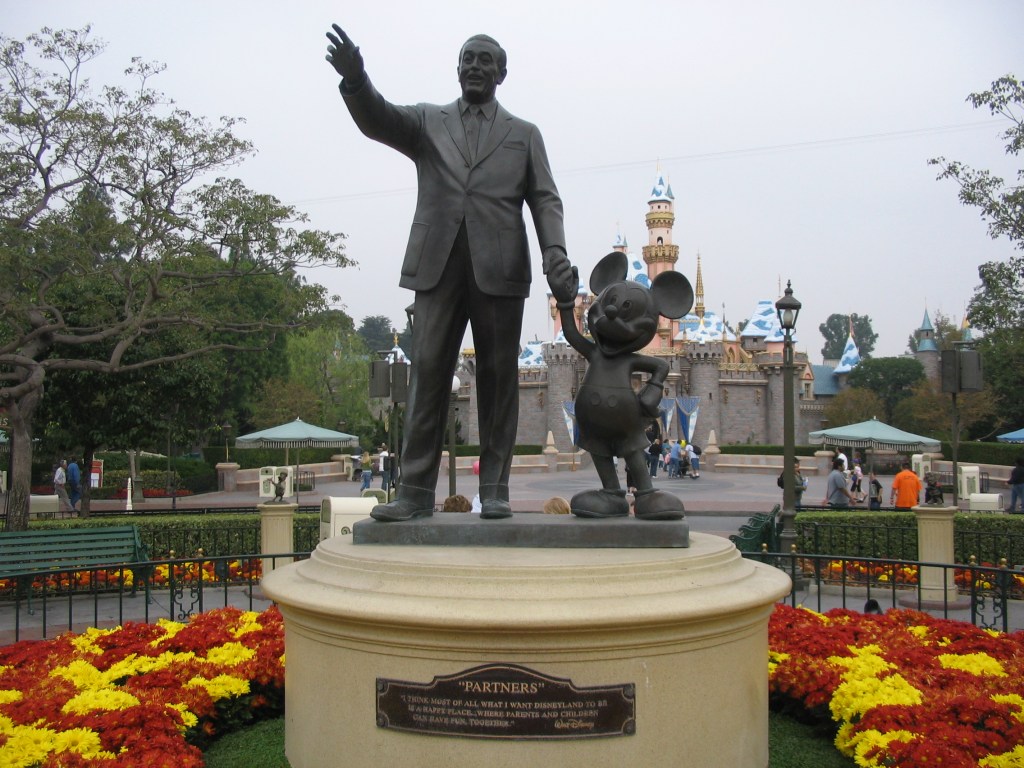
American animator, film producer and entrepreneur, Walt Disney instilled hope in the human heart. He once said, “All our dreams can come true, if we have the courage to pursue them.”

Disney was both an idealist and a realist. He made his dreams come true. His philosophy: “If you can dream it, you can do it.”

Today, Disney World is a dream come true for fans worldwide. Beloved by children of all ages, visited by 58 million people every year, it’s one of America’s top tourist destinations.

“It’s kind of fun to do the impossible,” Walt Disney said.

Why do so many people love Disney World? Why do so many people return again and again to the “Happiest Place on Earth?” What’s the magic behind the Magic Kingdom?

One word: Kindness. Disney employees extend loving-kindness to everyone they meet. Visitors get “high” off that unexpected, positive treatment. Many return annually for more goodness.

Oddly enough, loving-kindness is also the prevailing ethic of Buddhism. The technical term in the Pali language is metta.

Theravada Buddhist monks recite the Sutra on Loving-kindness (Metta-Sutta) every day. An excerpt:

This is what should be done by the wise,
the one who seeks the good and knows the meaning of peace.

Do nothing that is mean.
Do not deceive another, or despise anyone in any state. Do not, through anger or ill-will, wish anyone any harm.

Even as a mother watches over her child,
so with a boundless mind, cherish all living beings.
Radiate friendliness over the entire world, without limit. During all waking hours, establish this mindfulness of good will. It is called the highest state.

May all beings be happy and at their ease. May they be joyous and live in safety.

Mothers teach this sutra when they teach children to say the magic words. “Please” and “thank you” unlock the castle of kindness.

Growing up, we stop being polite. We get busy with self-centered agendas, and we end up living in the woods with the wolves. Buddhism says, “Come back to the Magic Kingdom.”

Walt Disney advises, “The greatest moments in life are not concerned with selfish achievements, but rather with the things we do for the people we love.”

Your family, your household, your place of work, your country — any place you visit — can be the Happiest Place on Earth as long as your prevailing ethic is kindness.

Human beings act kindly. Animals act selfishly.

In the game of Man versus Mouse, be a human being. Don’t reincarnate as a rodent, except for a rodent like Mickey Mouse.

Then, perhaps, all our dreams will come true.