Summertime is Family Time

Volume 65. July 6, 2025

Summer is the perfect time for family get-togethers.

Cooking outdoors, eating ice cream and engaging in enjoyable conversation are satisfying family bonding experiences.

For the deep thinkers among us, however, there always seems to be a niggling question: Who exactly is my family?

Jesus had a insightful answer. The story goes like this.

While Jesus was talking to a crowded room, his mother and brothers stood outside the door, wanting to speak to him.

Someone told him, “Your mother and brothers are standing outside, wanting to speak to you.”

Jesus replied, “Who is my mother, and who are my brothers?” Pointing to his disciples, he said, “Here are my mother and my brothers. For whoever does the will of my Father in heaven is brother and sister and mother to me.”

As Jesus makes clear, when we get beyond our ego and seek a higher reality, we are on the path of wisdom.

So, how does the Buddha handle this familial question?

The answer is found in an influential work from the Mahayana canon, the Vimalakirti Sutra. It was written about the same time as the Christian gospels, in the first century of the Common Era.

Like Jesus, Vimalakirti was an enlightened being come down from heaven to teach spiritual wisdom. Unlike Jesus, Vimalakirti was a wealthy layman and a friend of the Buddha.

One day Vimalakirti was asked, “Layman, your father and mother, wife and children, relatives and friends — who are they?”

Vimalakirti replied, “Wisdom is my mother. Skillful means which relieve people from suffering and lead them to enlightenment are my father. Dharma joy is my wife. Compassion are my daughters. Sincerity are my sons. Tranquility is my dwelling. The elements of the Way are my friends. Virtue is my companion.”

Do we see a pattern here?

For those on the spiritual path, traditional terms for relatives are inadequate because all human beings are part of our family.

Our country is currently embroiled in a bitter battle over the treatment of immigrants. One side sees them as criminals. The other side sees them as members of our human family.

Treating immigrants with cruelty shows the despicable behavior of an unethical, non-spiritual mind.

Ultimately, both sides want the same thing: peace.

How do we get there?

Roman Catholic Saint Mother Teresa spoke for Vimalakirti when she gave this advice: “What can you do to promote world peace? Go home and love your family.”

So, bro, sis, amigo, anyone up for a cookout this summer?

Everyday People and the True Dharma Eye

Volume 64. June 13, 2025

Sing it with me: “Ooh, sha-sha. We got to live together!”

Sly and the Family Stone enjoyed a chart-topping single (“Everyday People”) in 1969 that proclaimed a musical vision of human equality.

The song’s verses mocked the futility of people hating each other for being tall, short, rich, poor, fat, skinny, white or black, while its exuberant refrain declared, “I am everyday people.”

Sly Stone died on June 9 in Los Angeles. In an ironic coincidence, his idealism was reincarnated in anti-ICE protests that began in Los Angeles and have spread across the country.

Hundreds of thousands of everyday people have marched to decry the Trump administration’s heavy-handed immigration crackdown.

The impasse between immigrant-haters versus upholders of human dignity seems unbridgeable. How can we live together?

Buddhism points the way with a simple analogy.

Consider a coin. One side is covered with an infinite number of dots representing the endless dualisms that make up our world: tall/short, rich/poor, black/white. This is the world of samsara.

Now turn the coin over. The other side is completely blank. All things are identical and non-dual. This is the world of nirvana.

The two worlds are one world. Everything present on the busy side of the coin is encompassed within the blank side. In the non-dual world of nirvana, distinctions are wiped out.

Because of this underlying unity, all things share in one another’s non-dual identity.

All things are Buddha-nature.

Watching the news, we become engrossed in dualistic distinctions: National Guard/protesters, immigrants/citizens, right/wrong, ICE agents/deported husbands, smug presidents/weeping mothers.

When seen with the True Dharma Eye, we behold all these dualistic distinctions as one.

It’s all Buddha-nature.

Bodhidharma, the legendary founder of the Zen school, phrased Buddhist truth this way:

When your mind doesn’t arise inside,

the world doesn’t arise outside.

Buddhism offers an outlook that balances samsara and nirvana, dualism and non-dualism — two contradictory views of reality — and prevents either side from becoming too dominant.

Buddhism is the Middle Way. It takes the path between extremes.

The doctrine of non-duality helps us view the world in its proper perspective. The world is one despite its noxious differences.

When we avail ourselves of the True Dharma Eye, we do not abandon the world, but we do see the world in its purity.

At that point, we bickering humans can come together in harmony, like Sly Stone’s multi-racial, multi-gender band. Despite our differences, we too can make beautiful music together.

“Ooh, sha-sha.”

Connect with Spring

Volume 63. May 15, 2025

American modernist poet E. E. Cummings once asked:

O sweet spontaneous Earth, how often have the doting fingers of prurient philosophers pinched and poked thee?

How often has the naughty thumb of science prodded thy beauty?

How often have religions taken thee upon their scraggy knees squeezing and buffeting thee that thou might conceive gods?

Thou answer them only with — Spring.

Spring, ah, Spring. Our rhythmic lover has returned in all her glory.

The warm breezes. The tootling birds. The fragrant blossoms.

Why think? Why pinch? Why prod? Why analyze? Just breath.

Connect with Mother Earth.

Buddhism teaches that connections are vital to one’s well-being.

Perhaps a story may illustrate.

Long ago there lived a lonely elephant. Hoping to find a friend, he crossed grasslands, deep rivers and high hills. Despite his efforts, he could not find a companion anywhere.

Discouraged, he came to rest beside a quiet lake. He stared at his reflection in the water. He felt so lonesome he wanted to hand in his lunch pail and go to that elephant graveyard in the sky.

But then the still waters moved. A turtle emerged from the depths. It paddled over to the shore and asked the unhappy pachyderm, “Why so glum, chum?”

The elephant wailed, “I feel so lonely I could die.”

The turtle said, “My flap-eared fool, tune into the world around you. Listen to the wind. Feel the sunshine. Smell the flowers. Connect with the trees. Connect with your breath. Connect with your thoughts and feelings.”

The elephant focused on his surroundings. He listened to the wind rustling through the trees. He felt the warm sunshine on his skin. He followed his breath, slowly inhaling and exhaling. He observed his thoughts and feelings come and go like passing clouds.

Connected to himself and to the world around him, the elephant realized he was not really lonely at all. He felt alive and happy.

From that day on, the elephant lived in harmony with himself and his surroundings and never felt lonesome again. The End.

What’s the moral of the story?

Loneliness is not the absence of companions but the absence of connections.

All things are interconnected. Plants, animals and human beings depend on each other and live together in one grand, glorious web.

You exist; therefore, I exist.

When we disconnect from the web, we cause needless suffering.

When we connect with people, plants and animals, we thrive.

How can we make connections?

Spring, our cheerful goddess, is here to help.

Where Has All Our Humanity Gone?

Volume 62. April 12, 2025

In the 1955, folk singer Pete Seeger wrote a song that asked,

Where have all the flowers gone? Long time passing.

Where have all the flowers gone? Long time ago.

Seventy years later, in 2025, the question has become more dire:

Where has all our humanity gone?

During the last three months, over a hundred thousand workers have been dismissed from the altruistic ranks of public service.

The National Endowment for the Humanities has been defunded, along with thousands of local arts and cultural groups.

USAID has been terminated, ensuring the world’s richest country will stop giving food to the world’s poorest families.

Another day another dagger to the heart of American humanity.

Ebenezer Scrooge is jumping for joy. What’s going on?

The Buddhist answer lies in the six realms of existence.

According to Buddhist cosmology, one can exist as a human being, a god, an anti-god, a restless ghost, a hell being or a wild animal.

Humanity is the very best existential state. Only human beings can achieve enlightenment in this present incarnation. Humans do so by helping one another. Humans realize we are all in this together.

Human beings act selflessly, with kindness for all.

The very worst existential state is that of wild animals. Beasts live by the law of the jungle: Eat or be eaten. Survival of the fittest. Wild animals are in it for themselves. They act selfishly.

Businesses of all stripes act like wild animals. They survive by eliminating waste, increasing efficiency and maximizing profits.

In America today, business values have replaced humanistic values.

We see this in government as well as in higher education.

Liberal arts colleges, university humanities programs and schools of continuing education are disappearing as rapidly as butterflies because their leaders are driven by the profit motive.

College students are no longer learning how to be human beings.

They are learning how to make money.

Once you smell money, you want more. Wanting, we compete. Competing, we hate. Hating, we separate.

Not wanting, we don’t compete. Not competing, we turn peaceful. Peaceful, we enjoy unity.

Take humanity out of human beings and what are we left with?

Individuals who are more self-centered, more disconnected from each other, and less concerned with the well-being of others.

In a word, animals. Come now, America, we’re better that.

One can imagine a pitiful Buddha shaking his head at us and singing Pete Seeger’s closing words of poetic admonishment:

When will they ever learn?

When will they ever learn?

The Buddha on St Patrick’s Day

Volume 61. March 17, 2025

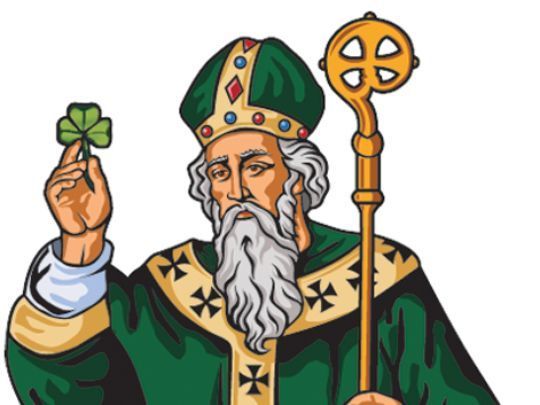
Ever since St Patrick held up a shamrock and explained that God was a Holy Trinity — three aspects of being in one Holy Person — the Irish people have been close to the divine.

Perhaps a story may illustrate.

Years ago, a young man toured the major cathedrals of Europe. Invariably, inside each historic Gothic church, he saw a golden telephone enthroned on a short marble pillar. Near the phone was a sign that read: “Direct line to God. $1000 per call.”

France, Germany, Spain, Italy, England — every major cathedral across Europe featured the same golden phone and the same sign.

Then the young man traveled to the Emerald Isle. Again, he saw the golden phone mounted on the marble pillar. This time, however, the sign read: “Direct line to God. 25 cents per call.”

Curious, he asked the Irish priest why this phone was so cheap.

The priest explained, “In Ireland, it’s a local call.”

Irish Catholics believe God has made his home right beside us.

Because of his great love, God the Father in Heaven not only sent His Son to Earth to teach us, but God also dwells in our hearts, guiding our lives through the presence of His Holy Spirit.

Oddly enough, Mahayana Buddhists believe the same thing.

According to the tri-kaya (“three body”) system, the Holy Person of the Buddha has three aspects to his one infinite being.

The Nirmana-kaya is the “emanation body.” Like Jesus Christ, the Buddha temporarily appeared on Earth to teach humanity the path to salvation. The Buddha was a historical man called Shakyamuni.

The Sambhoga-kaya is the “bliss body.” Like God the Father, the Buddha also dwells permanently in heaven as a deity. In fact, there are five Buddha gods living in five Buddha heavens: one for each quadrant of the universe, and one for the center of the universe.

The Dharma-kaya is the “body of great order.” This is the true body of all Buddhas. This body is co-extensive with all matter and co-temporaneus with all time. Our space-time continuum is the Buddha, in his body of great order.

Seekers of religious wisdom use the tri-kaya system to explain how the divine can walk among us as a man, dwell in heaven as a god, and yet be the totality of existence all at the same time.

But why stop there? Apply the tri-kaya system to yourself.

The Nirmana-kaya is what you do — compassion.

The Sambhoga-kaya is what you know — prajna.

The Dharma-kaya is what you are — thusness.

When you act selflessly and understand your nature as emptiness, you become the totality of existence.

Without even resorting to Irish whiskey.

God love him! St Patrick sure did pack a lot of wisdom into that one little shamrock.

Valentine’s Day Blues

Volume 60. February 14, 2025

American rock duo The Everly Brothers once sang:

Bye-bye love. Bye-bye happiness.

Hello loneliness. I think I’m gonna cry.

Bye-bye love. Bye-bye sweet caress.

Hello emptiness. I feel like I could die.

If you did not receive a Valentine this year, if you felt a twinge of anguish by not reading the words Be Mine, please take heart.

You have experienced the Buddha’s First Truth: All life is suffering.

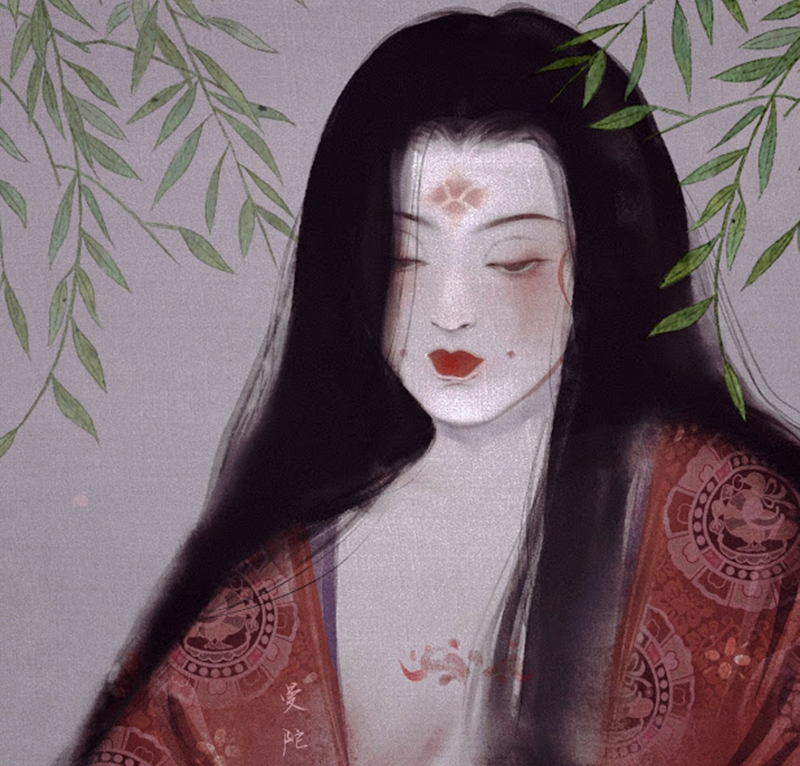
Heartbreak is an especially painful form of suffering. No one knew that pain worse than the Tang emperor of China, Hsuan Tsung.

During his later years, he fell in love with a very beautiful woman. He was first smitten on seeing her emerge from a warm bath.

The dramatic tale of their moving romance is related in the poem “The Song of Everlasting Sorrow.” A verse:

The emperor neglected the world from that moment.

He lavished his time on her in endless enjoyment.

She was his springtime mistress, and his midnight tyrant.

He could never stop himself from gazing at her.

During the An Lushan Rebellion, however, the emperor and his court were forced to flee from the capital. The emperor’s guards demanded that he put his consort, Lady Yang, to death because they blamed the rebellion on her family.

The emperor capitulated and reluctantly ordered his attendant to supervise her forced suicide. Hsuan Tsung was devastated.

The last line of poem sings poignantly:

Earth fades, Heaven fades, at the end of days.

But Everlasting Sorrow endures always.

Weep not, oh lonely potato! Lament no longer!

Your black dog’s barking. You’re singing the blues. The light of love has gone out. But there is hope in this cruel world. Darkness is not your friend. Take consolation in Buddhist philosophy.

Lady Yang’s bewitching face emerging from a hot bath is no different from your face or my face.

We are all imaginary flowers in the air, for we all are empty.

Your life is my life for all life is the Dharmakaya.

The Dharmakaya is the only reality. All else is dream-puffs.

Behold the empty ocean. Gulp it greedily like a fish!

Life is an only dream. Come now, Dreamer, awake!

Nothing compares with the mighty sweetness of the Buddha’s big blank mind.

When we want, we lose. When we lose, we suffer.

Cease selfish wanting! Live in the freedom of egoless-ness.

Join your voice with The Everly Brothers. Sing, “Hello, emptiness!”

Embrace this core Buddhist concept. End your dreamlike sorrow.

And — awake — begin your true life as a Buddha.

Democratic Power Outage

Volume 59. January 18, 2025

American scholar Joseph Campbell once wrote, “Politics is the art of gaining power over men.”

Elbowed out of office, Democrats are feeling pretty low these days.

As Republicans gleefully assume control over the three branches of federal government (legislative, judicial, executive), and as Donald Trump gleefully resumes his three ring circus of corruption, cruelty and chaos, depressed Democrats need encouragement.

How can Buddhism help the Blue Team? Perhaps, with a story.

One day, Sojitsu, an outstanding monk, was assigned head priest of a rundown old temple. Conditions there were very difficult.

Leaking roofs. Sodden floors. The temple was so poor no smoke was seen rising from the cooking fire for days on end.

Temple rats were so hungry they were reduced to gnawing on their own entrails. At night, the gods of poverty howled.

When his sympathetic brother monks heard the news, they felt sad and angry. They furrowed their brows and grumbled.

Finally, they complained to their master saying:

“Master, our brother is a true Zen hero. We were sure he would receive a top post at some great monastery. He was going to make his mark on the world. What a disappointment you assigned him to that old temple. What a waste to throw a man of such talent into a weed patch like that! It’s worse than sending an innocent man into exile on a remote island. It brings tears to our eyes just to think about it. You might as well toss him into a pile of rubbish. Your decision greatly dispirits us. Master, you alone seem to rejoice in this appointment. Why?”

The Zen master replied, “Let Sojitsu explain.”

The monks visited Sojitsu at his rundown temple. He seemed quite happy, not angry at all. Puzzled, they asked why he had accepted such a degraded position.

Sojitsu said, “I have always held with the deepest regard the great kindness and compassion my master has regularly bestowed on me. If he had told me to live among barbarians or man-eating demons, how could I have refused him?”

The monks pressed their palms together and bowed. The End.

What’s the moral of the story? One word, humility.

Humility is a lack of pride, arrogance, swagger. It takes a special person to remain humble in the face of honor or dishonor.

Bodhisattvas are enlightened beings. They have perfected the virtue of humility. Bodhisattvas are not attached to their egos. Bodhisattvas realize their true self is the No-self.

Anyone cast out into the wilderness, wincing at a painful loss of power and prestige, like a depressed Democrat today, faces a tough test of their spiritual mettle.

If you’re here to gain power over men, you’re on the wrong path.

If you’re here to humbly help others, you’re on the path to enlightenment.

The Buddha’s Holiday Gift-giving Guide

Volume 58. December 17, 2024

Celebrated diarist Anne Frank once wrote, “No one has ever become poor from giving.”

With that attitude in mind, let’s run through the Buddha’s Holiday Gift-giving Guide. And what better way to begin than with a story.

One day the head priest of a Zen temple in medieval Japan asked his master for a small gift — just a short verse that would inspire students long into the future.

The Zen master licked his brush tip and wrote the following:

“There is in this great universe a treasure of incalculable worth. Anyone who gets hold of it will become a person of enormous happiness, prosperity and wisdom.

“But if this treasure eludes him, then even if he is a king, a prince, a nobleman, or a person of immense wealth, he will remain a base, poor, ignorant fellow.”

What an inspiring verse!

As the story suggests, meditation is the Great Free Treasure. It enriches all, it’s designed for everyone and it costs nothing.

The Great Free Treasure is the perfect gift for that spiritual cheapskate on your list who prefers inexpensive gifts.

For the ambitious overachiever, for that special someone who strives for spiritual greatness, go deluxe. Wrap up for that eager beaver the Zen Master’s Agenda:

1. Lead all beings to salvation.

2. Create a Buddha-land on earth.

3. Acquire the deportment of a bodhisattva.

4. Store up great Dharma assets.

5. Preach the Dharma unflaggingly to benefit sentient beings.

Most people on your list, however, will probably fall somewhere between a spiritual skinflint and a Buddhist billionaire. For those moderate seekers, the ideal stocking stuffer is the Middle Way.

The humble practice of morality, meditation and wisdom is sure to warm the heart of almost any spiritual aspirant.

To finish our story. After the Zen master handed the head priest the inspiring verse, the master complimented the priest that he had indeed acquired the Great Free Treasure.

But the master warned him, “If you become satisfied with that accomplishment, sleeping comfortably, resting on your laurels, thinking only of yourself, looking down your nose at others, you will be as vilified as a muck worm wriggling in the mud.”

The End.

What’s the moral of the story?

Once acquired, the gift of Buddhism is not something we sit on.

We don’t become complacent. We give it to others.

Best of all, we don’t become poor from giving.

Merry Christmas!

Bro World Cheers Their Once and Future King

Volume 57. November 10, 2024

Trump supporters are in hog heaven.

Kinder and gentler is out. Ruder and cruder is in. Women are out. Men are in. Like James Brown, the godfather of soul, once sang, “This is a man’s world.”

Ever since the dawn of the Iron Age, ever since about 3500 BCE, ever since the Mother Goddess was demoted and the Father God was elevated, it’s been a man’s world.

In a victory for the history books, Donald Trump staged a comeback not seen in American history since Grover Cleveland won a second non-consecutive term in 1892.

Apparently, Donald Trump is a superhero. He’s indestructible. America likes heroes. Problem is, Trump is an anti-hero.

He stands up for what most people detest: misogyny, lying, selfishness, bullying, white supremacy. Repellent to the core, Trump is a far cry from the Buddhist ideal of compassion.

In Mahayana Buddhism, the quality of compassion is localized not in the Buddha, but in the Bodhisattva of Compassion.

She goes by various names. In China, she is Guan Yin. In Japan, she is Kannon. In Vietnam, she is Quan Âm.

Although she started out in India as a man (Padma-pani) and is formally known as Avalokiteshvara (“the lord who looks down”), the bodhisattva is usually depicted in feminine form because compassion is understood to be a psychologically feminine trait.

One story emphasizes her feminine dimension.

Once upon a time, the celestial Buddha Amitabaha vowed to save humanity. Since he was restricted to his heavenly abode of bliss, he sent his emissary of mercy to survey the world.

As his bodhisattva flew across the land, she heard the mournful moans of suffering souls and the pitiful groans of hungry people. As she looked down upon the world with the eyes of compassion, she felt a tear well up in her eye.

The tear splashed to earth, mixed with the soil and became Tara, an emanation of the Bodhisattva of Compassion.

Tara vowed always to be re-incarnated as a woman to heal the suffering of our land.

Perhaps, Tara has re-incarnated in you.

How does a wise person approach Trump’s recent victory?

Three ways: Morality, meditation and wisdom.

Treat others with kindness. Meditate. And have a little wisdom.

Realize that all things are impermanent, even Donald Trump.

Kamala Harris supporters may be fearing the Fourth Reich, while Donald Trump supporters are celebrating in hog heaven,

But recall what James Brown told us about our world:

“This is a man’s world, this is a man’s world. But it wouldn’t be nothing, nothing, without a woman or a girl.”

Amen

Election 2024

Volume 56. October 28, 2024

Perhaps the legendary American singer and songwriter Bob Dylan was thinking of Donald Trump when he sang sardonically, “Patriotism is the last refuge to which a scoundrel clings.” 

After three consecutive presidential elections, most Americans like Bob Dylan know the score on that dishonest, anti-democratic demagogue and 34-time convicted felon Donald Trump. 

But lest we forget what a second Trump administration would look like, let’s keep in mind the chaos of the first. 

The Washington Post kept a running count of the lies Trump told during his White House tenure. His total tally of false claims amounted to 30,573. That’s 21 lies per day everyday for four years. 

Does anyone really want to be misled like that again? 

Perhaps Bob Dylan was thinking of the bedlam of a second Trump administration when he added: “Freedom just around the corner for you. But with truth so far off, what good would it do?”

America is the home of the free. Here we are free to play football. Well, Election 2024 is analogous to a football game. 

Before the game, the field is at peace. We behold green grass. Silent seats. Tranquility. Harmony. Unity. Nirvana.

During the game, there is polarity, division and contention. 

Two opposing teams clash, advance the ball through enemy territory and fight for touchdowns. All the while, thunderous fans roar like jet engines for a victory over enemies. Samsara. 

After the game, the peace returns. 

As we suit up for Election Day 2024, we need to put on the helmet of right thoughts. We need to turn samsara into nirvana. 

How so? Practice morality, meditation and wisdom.

Our goal should not be victory over enemies. 

Our goal should be the path of peace.

American Buddhist Jack Kerouac (1922-1969) once wrote: “In a swirling storm of emotions, different goals and opposing lives,    the solution is obvious: Take the goalless path of the Buddha.” 

That’s sound advice. 

With inescapable advertising, constant news coverage, and incessant bombardments of balderdash, our minds are unable to contemplate clearly the complete beauty of the Dharmakaya. 

Now is the time to meditate. Now is the time to show compassion. Now is the time to realize that all people are equally loved, all people are equally empty and all people are becoming Buddhas. 

Patriotism might be the last refuge to which a scoundrel clings. 

But peace is the path to which a Buddha clings. 

There’s a beautiful world out there. 

Slow down. Breathe. Enjoy it.

See you on the path of peace.