
This Year’s Commencement Speaker: The Buddha!

Vol. 16. June 8, 2021

Amy Poehler had a great opening line for a commencement speech. To a raucous crowd at Harvard in 2011, the comedienne said, “Friends, Romans and countrymen: Lend me your beers.” 

Steve Jobs was a bit more sober. For a commencement speech at Stanford in 2005, the Apple founder offered graduates this advice: “Your time is limited. Don’t waste it living someone else’s life … Have the courage to follow your heart and intuition.” 

At this time of year, many people are venturing forth to find their way in the world. Commencement means a beginning. 

For those beginning to embark on the spiritual path, there is no better commencement speech than one offered by the Buddha. 

In the Dharma-Chakra Sermon, the Buddha laid out the path to enlightenment: morality, meditation and wisdom.  

Be kind to yourself and others. Meditate. And realize that all things are impermanent, even yourself.

The core of the Dharma-Chakra Sermon is that desire causes our suffering. Desire is egocentric and selfish. As Jack Kerouac wrote,

Wanting, we get.
Getting, we lose.
Losing, we suffer.
Suffering, we die.

So, the Buddha tells us: Give up desire.

How? Practice morality, meditation and wisdom.

When we are kind to others, when we meditate, when we realize that all things are impermanent, suddenly, we are in nirvana.

Not wanting, we don’t get.
Not getting, we don’t lose.
Not losing, we don’t suffer.
Not suffering, we live in nirvana, if only for a moment.

One More Speech

On the unlikely chance, Harvard or Stanford would ask me to give a commencement speech, I would offer this simple advice: 

Whatever you do in life will end in suffering, except the Dharma. 

Follow the path of all Buddhas, dear graduates, and you will lead an extraordinary life just by being ordinary. 

Life is not a game to win or a problem to be solved. 

Life is a joy to be experienced. Experience the joy. 

You got your whole life ahead of you. Everything you do in life will end happily ever after, if it’s the Dharma you do. 

Love everybody no matter what — it’s hard to do, but it’s the only thing that is worth your while. And it’s the only thing that will last. Everything created will die. But love is eternal.

Hey Amy Poehler, let’s raise a glass to that. 

Spring Cleaning

Vol 15. May 8, 2021

When asked if she did any household chores like spring cleaning, comedienne Phyllis Diller put it this way. 

“Housework can’t kill you, but why take a chance?”

Yes, my friends, it’s that pesky time of year when we throw open the windows, vacuum the carpets, dust the shelves and clean the sheets. Winter dross, make way for Spring freshness. 

With a wife, daughter and cat, I find that a good deal of garbage tends to accumulate around our humble abode. I also find myself taking out the garbage frequently. 

Some days, I curse the drudgery. Other days, I do my duty robotically. Occasionally, I have a breakthrough.  

One morning I took out the garbage during a gentle spring rain. Soft raindrops pitter-patted on the driveway and the outdoor cans. I opened the lid, tossed in the family refuse, then paused.  

I looked up at the iron clouds floating by.

The raindrops felt soothing on the skin, relaxing as they splashed in puddles on the pavement. No one was around. No chipmunks. Not even a bird chirped in the rainy stillness.

I soaked in the simplicity. 

Then a saying from Zen master Huang-po popped in my head.

“Everywhere your foot may fall is a sanctuary for enlightenment.” 

The raindrops, the puddles, the garage, the garbage, the backyard, the whole scene including myself was at one with eternal reality. 

Take out the Garbage

Then it dawned on me. Take out the garbage in my head. 

In Zen, garbage was, is and ever shall be conceptual thoughts.

That other stuff in plastic bags is merely matter. 

That tuna can, those orange rinds, that cat poop, that rice bag, those shrimp shells — all that matter in its discarded “garbage” form isn’t me. But its essence is me. 

There is only One Universal Essence. Buddha-nature.

Nothing is me in its form. Everything is me in its essence, its suchness. 

Oh Suchness Ones, meditate and behold the beautiful Buddha world spread upon the earth. Stop meditating and behold the dream-crap of your mind. 

It’s the same stuff, the same matter, but how do you approach it?

If you look at garbage as “that dirty napkin,” “those old tennis shoes” — as concepts — you unleash a legion of demonic thoughts.

Observe them in their purity, and they are Buddha-nature.

Don’t let garbage fill your mind. 

Find freshness in the promise of right now. 

Spring freshness doesn’t exist in the moldy past or muddy future. 

Spring freshness exists in a mind free from conceptual thoughts. 

Adoration to the big, blank mind of the Buddha. 

Take out the garbage.

It won’t kill you, like housework.  

Cherry Blossoms

Vol. 14. April 9, 2021

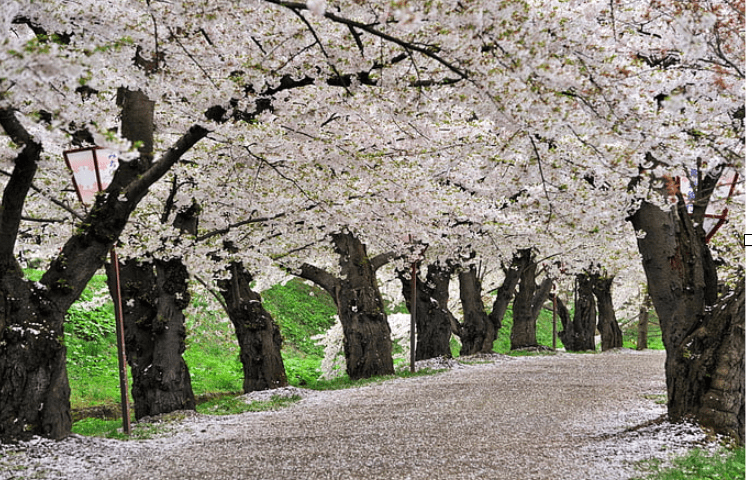
In April 1896, the poet A.E. Housman took a carriage ride in a woodland park. He captured the beauty of the moment in verse.

Loveliest of trees, the cherry now

Is hung with bloom along the bough,

And stands about the woodland ride

Wearing white for Eastertide.

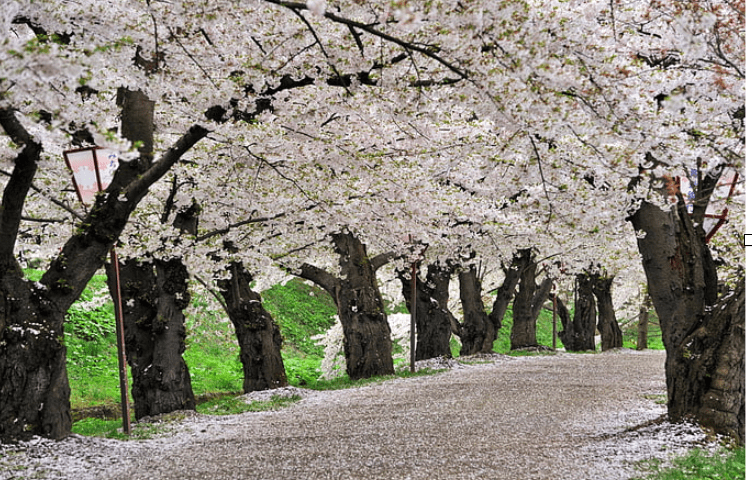
One hundred and twenty-five years later, on March 26, 2021, cherry trees in Shinto shrines across Kyoto came into bloom. This seemingly innocuous event is remarkable for many reasons.

Due to an unusually warm spring, the peak happened earlier than ever before. Even more remarkable is that the Japanese have been recording the date of cherry blossom peaks for the last 1200 years.

Ever since 812, when Emperor Saga sat on the Chrysanthemum Throne, the Japanese have recognized this flowery event as special.

But what is most remarkable is why the Japanese have been recording this event. It’s not to accumulate scientific data. It’s to celebrate the transient beauty of the moment.

Japan is a land steeped in Zen Buddhism. Zen dwells in the present moment. Zen opens us up to experience the here and now.

This cup of tea. This friend of mine. This laughter we share. That bug. This beautiful flower. To miss the moment is to miss life.

The fleeting beauty of the cherry blossom is a metaphor for life. It’s here today and gone tomorrow. Nothing lasts for forever.

When families, couples in love and kids of all ages flood the parks for hanami (“flower viewing”), they realize their joy is ephemeral. Life is as brief as a sunset. And as beautiful.

Carpe Diem

The moment is all we have. We don’t have to be a Shinto priest or a Zen master to behold the wonder of this transitory tick of time.

We can do it easily through meditation.

A.E. Houseman closed his brief poem with these lines:

Now, of my threescore years and ten,

Twenty more will not come again …

And since to look at things in bloom

Fifty springs are little room,

About the woodlands I will go

To see the cherry hung with snow.

Houseman was 70 years old when he experienced a Zen moment. It left him begging for 50 more years of the same.

My friends, why wait for a Zen experience?

The beauty of the moment is right before you.

Celebrate the timeless in a time called now.

The Timeless Time-Out

Vol. 13. March 10, 2021

One year in captivity

Bob Dylan put the pandemic in perspective when he sang,

Every step of the way, we walk the line.  Your days are numbered. So are mine.
Time is piling up. We struggle and we scrape.  We’re all boxed in, nowhere to escape.

Time indeed is piling up.

One year in captivity. One year of Contagion Claustrophobia. One year of Decreed Detention. One year in Pandemic Prison.

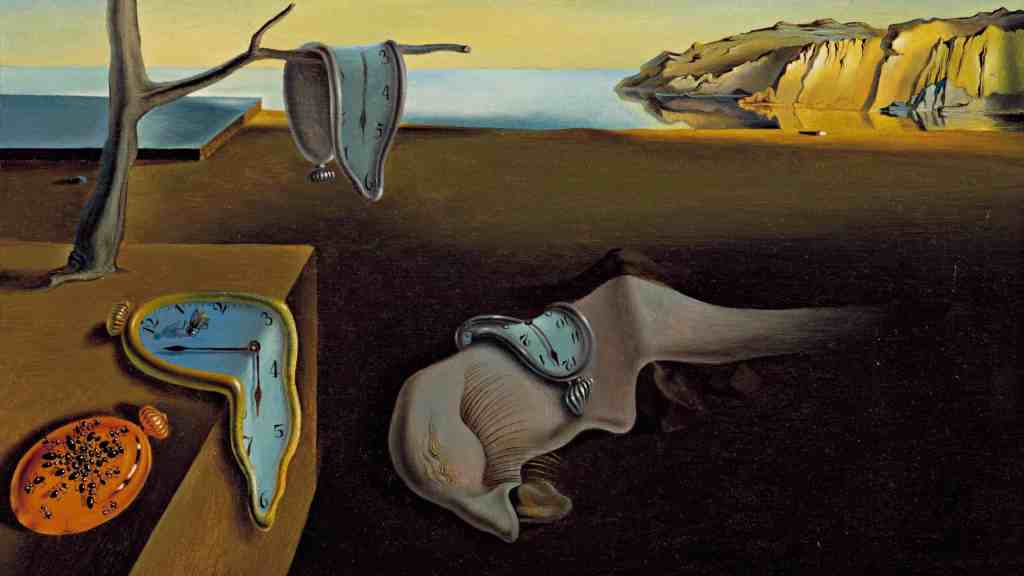
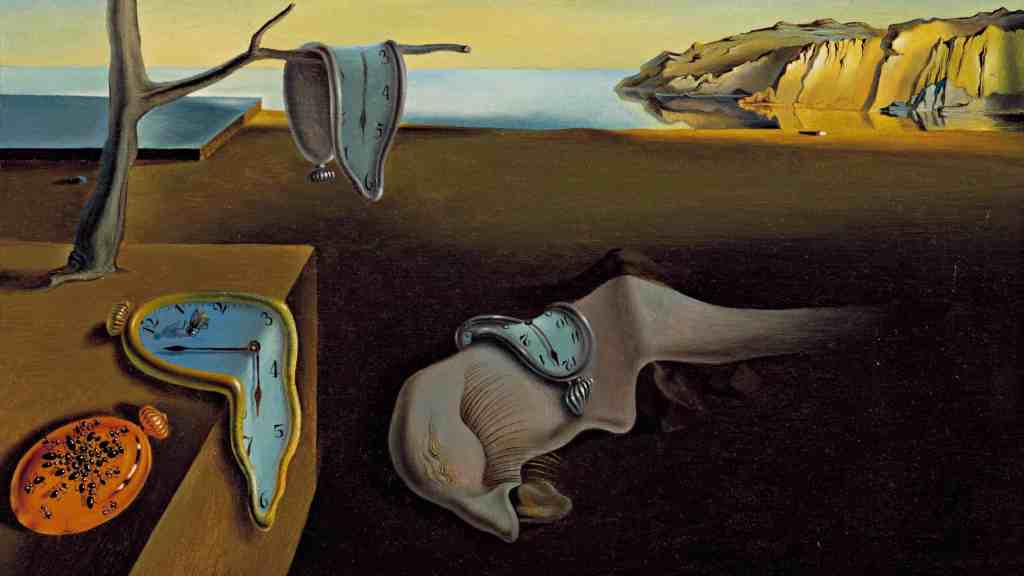
One year. March to March. Marching nowhere. Frogmarched. Time slows down, stretches out, elongates. The Timeless Time-out.

Now is back then. Then is right now.

We are the Plague People. The Lockdown Lunatics. The Masked Meanderers. Habituated to Home. Reconciled to Routine.

Above us, the blue sky, endless, immense, impartial, unchanging. The past year was a dream. The future too. And most amazingly, so too is the palpable pandemic present. All a dream.

Beyond it all is the Non-dreaming Non-self, Nirvana.

We, the Sweet Suffering Swine of Samsara, struggle and scrape through life, while all the time ignorant that our misery is bliss. Samsara is Nirvana.

How can we rise above the misery to see a new vision of reality?

Look at that sky for a while. Then look at the earth. See if it isn’t one pure Suchness.

The natural state of everything is blank, empty, serene, one.

As soon as conceptions cease, Indivisible Reality is here.

Zen calls it Buddha-nature.

See things in their suchness

Buddha-nature

Buddha-nature is everywhere. It’s everything. It’s every moment. Dwell on divisions, devolve into duality and samsara is yours to roll around in. Wallow in that mud of misery, my fellow swine!

But we can stop the misery. We can clear away the clouds.

Meditate. See things in their suchness. Nirvana is in the palm of our hands. It always has been. Our true nature is never separated from us, even in moments of delusion.

Our little minds divide Time into past, future and present. But Time is one. Time is the eternal now. March 2020 is March 2021. Our Divided Decreed Detention endures only in our thoughts.

Samsara has no reality, yet we trade our immaculate minds for it.

Every step of the way, we walk that line.

When are we going to stop the madness?

Time is piling up.

There’s nowhere to escape.

Samsara is Nirvana. — Rejoice!

Buddhahood is the Way

Vol. 12. February 9, 2021

Do not conceptualize anything.

Jack Kerouac wrote, “Happiness doesn’t come from coddling the senses, but from cultivating the mind. Buddhahood is the way. I’m not gonna be fooled anymore. I’m here to stick to my sweet tathagata.”

How do we achieve happiness? How do we cultivate the mind? Here’s some advice from a 9th century Tibetan manuscript found in a dusty cave on the Silk Road in Dunhuang.

“Straighten your back. Don’t say anything. Turn away from the senses, and observe your mind. Do not conceptualize anything. Once you have sat for a long time, the mind will stabilize.”

It sounds easy, and it is. But our minds have a nasty habit of conceptualizing stuff. We rarely reach a level of clarity. We pollute sensory input with names and labels. We get lost in our concepts, and we mistake conceptual reality for truth.

Bob Dylan said, “All the truth in the world adds up to one big lie.”

Last night, I had moment of clarity.

Just before I tucked into bed, I looked out my window to a church across the street. Some winter wanderer was camping out in front of the church doors. The temperature was near zero.

I couldn’t very well go to sleep in a warm bed knowing someone was sleeping in the cold outside my door. I had my jammies on. What was I to do? I faced a moral dilemma.

I … it’s always I. (I hate that. It’s all about me. My comfort.)

I called the police. They checked on the person. They put him in the squad car and drove off, presumably to a homeless shelter.

I slept peacefully knowing I helped a fellow human being in need. But I woke up in a reflective mood.

In compassion, there is no ego. There is only unity.
Clarity is non-conceptual

Why is it all about me? My comfort? The Buddha said anatman, there is no self. The realization of a homeless person freezing at my feet broke through my self-centered ego. My ego consciousness is so thick that it took a pitiful sight to rend my heart open and pour out a cup of compassion.

In compassion, there is no ego. There is only unity.

That person freezing outside was not some stranger in the night. It was you and me. There is no difference between subject and object. A guy looking out a window and a guy freezing like a flag pole outside the window are the same guy.

Clarity is non-conceptual. If I got stuck in the concept “me/him,” the sun would have rose on a cold corpse outside a church door.

Non-conceptualization erases subject-object duality.

It makes you feel happy.

That’s why I’m not gonna be fooled anymore.

Buddhahood is the way.

I’m sticking to my sweet tathagata.

The Insanity of Ignorant Humanity

Vol. 11. January 9, 2021

Are we going to feed the Beast of Ignorance?

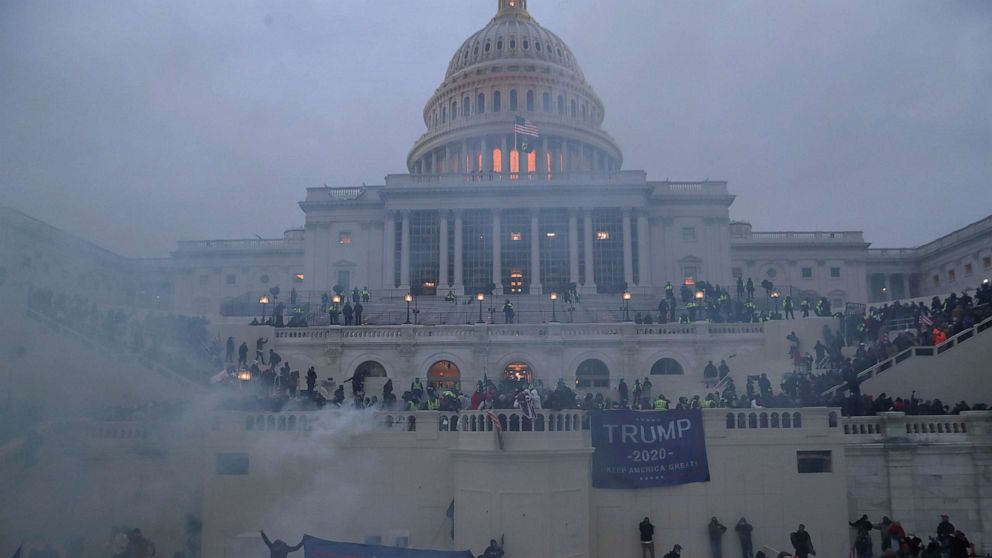
The Washington Post summarized the events of January 6, 2021 in a memorable headline: Pro-Trump Mob Storms Capitol. 

The rioters disrupted congressional lawmakers who were mulling over the counting of Electoral College votes. 

The violence left five people dead and a nation in shock. 

Senate minority leader Chuck Schumer (D-N.Y.), echoing FDR, called it a second day in American history which will live in infamy.

But Senator Dick Durbin (D-IL.) got to the heart of the matter. He questioned, “Are we going to feed the beast of ignorance (and) lie to the American people? We saw that beast here today, roaming these halls, and we won’t welcome it back.”

The insanity of ignorant humanity is not confined to the selfish desires of a president who cannot accept defeat, nor to the mob of thugs he incited and invited to the desecrate the sacred halls of Congress. Its present in all of us. 

A crazy quilt of dark impulses lurks within the human heart. It’s part of what we are.

It’s the part that flees from wisdom, and feasts on ignorance.

Ignorance is Enlightenment Reversed. But do not be mistaken. In highest truth, there is no difference between Ignorance and Enlightenment. Both abide in Universal Oneness. 

Call it what you want — God, the Dharmakaya, Allah, Emptiness, the Absolute — but names are arbitrary conceptions of the One. 

The One is available at any time, free of charge, no money down, through meditation.

Whoever obtains a direct realization of the Buddha Mind, thereby understanding the real form and real appearance of things, experiences the One.

Oneness is available at any time through meditation.

Oneness

As long as we think we will be enlightened by our own efforts, instead of Universal Oneness, we are lost in whimsical thoughts.  

Mind and Form are One. Absolute Reality is the Grand Oneness.

One means one, not two. Reality is one, not two. 

To impose duality on Universal Oneness causes unnecessary suffering for yourself and others. Stop the insanity!

Let Universal Oneness be. Then a happiness will wash over you. A happiness not caused by your own effort. But a happiness that has always been there. A happiness with no beginning and no end. A bliss of knowing that our lives are dreams from which the dreamer awakes. 

If we fail to see that all things exist as One, we go on dreaming.

Buddhas wake up from the dream. 

Buddhas enter the Halls of Nirvana. 

Dreamers enter the Halls of Congress. 

But in the end, both Halls are One.

’Tis the Season of the Virgin Birth

Vol. 10. December 8, 2020

That’s what Christmas is all about, Charlie Brown.

And lo! the angel of the Lord came upon them, and the glory of the Lord shone around them, and they were afraid. And the angel said unto them, “Fear not. For behold, I bring you tidings of great joy. For unto you was born this day in the city of David a Savior, who is Christ the Lord. And this shall be a sign unto you: You shall find the babe wrapped in swaddling cloths lying in a manger.”

Suddenly there was with the angel a multitude of heavenly hosts praising God and saying, “Glory to God in the highest heaven. And peace to people on earth.” Luke, Ch 2.9-14

In Christian belief, Jesus experienced a virgin birth.
In Buddhist belief, the Buddha also experienced a virgin birth.

Jesus and the Buddha, of course, where both born physically. They were humans just like you and me. So why are their birth stories depicted as non-physical? Because virgin birth is a metaphor. Virgin birth symbolizes the birth of the spiritual life.

In Buddhism, we give birth to the spiritual life when we realize there is no individual in matter.

The dualism of Ignorance and Enlightenment made this world. Beyond that is the realm of the Buddha, the indescribable void.

There’s no individual you suffering in samsara. There’s no individual you entering nirvana.

The Buddha neither makes the world nor destroys it. He is beyond the chain of causation.

Ignorance and Enlightenment are merely words representing the absence of the other.

In reality, All is one. All is empty. All is the diamond crystalline void.

The Buddha abides in non-duality.

Non-duality

The Buddha abides in non-duality, free from arbitrary conceptions, like Jesus/Buddha, hot/cold, enlightenment/ignorance, birth/death.

Dualism made the world. But it took place in the Buddha’s womb. In that womb, ignorance and enlightenment exist due to our conceptual battle. In truth, they are empty. As are we.

Sentient beings, imprisoned in form, dead in dualism, ignorant of enlightenment, do not realize all things are different forms of the same thing, which is empty, yet full, yet neither, yet both.

Selfhood is a product of karma. Selfhood is a Thanksgiving leftover, a wood chip hacked off a chopped down Christmas tree. Selfhood is automatically produced by karma.

When a Black man is gunned down in the streets of Chicago, he leaves an imprint that makes President Joe Biden. Some person died long ago and that cheerful, intelligent spirit gave form to me. But there is no individual in matter.

There’s only the Unity. The Undisturbed Unity.

The Don’t-Worry-All-Is-Well Wonder of the Universe.

That’s the virgin birth.

That’s what Christmas is all about, Charlie Brown.

Has the Age of American Cruelty ended?

Vol. 9. November 9, 2020

Buddhism can help bind up the wounds of our nation

On March 4, 1865, with the end of the Civil War in sight, Abraham Lincoln addressed the nation: “With malice toward none, with charity for all … let us … bind up the nation’s wounds.”

It seems as if America has been through another Civil War. The Election of 2020 has left America bitterly divided. Feelings are raw. Hatred goes deep. Misunderstanding rules the day. Opposing sides can’t talk to each other. If they communicate at all, they argue.

It’s a sad state of affairs. Buddhism calls it suffering in samsara.

Enduring images of the last four years include children ripped away from mothers at the border, Black people murdered in the streets, protesters gassed, immigrants banned, allies alienated, science dismissed, women belittled, empathy obliterated. In a word, Cruelty.

The better angels of our nature don’t do that. But humans suffering samsara do. America needs to heal. How can Buddhism help bind up the wounds of our nation?

Easy. Good moral behavior.

Rock bottom Buddhist morality boils down to five things: Don’t lie. Don’t steal. Don’t kill. Don’t misuse sexuality. And don’t use intoxicants.

Think of where America could be if she hadn’t had a deafening stream of lies for the last four years. [Let alone the sex scandals, the blood shed over race, and the bilking of money by corruption.]

Gentle behavior and mild speech is not a teahead vision of reality.

Compassion

The Five Precepts are basic morality for any Buddhist. But for those hearts who want to go one step further there is compassion. The term literally means “suffering with” people in the sorrows of samsara. Bodhisattvas do it. And so can we.

Instead of insults, offer compliments. Instead of hoarding wealth through tax cuts, share the wealth with those in dire need.

Compassion resets the moral compass away from selfish desires and toward selfless concerns. People hurting need love, not cruelty.

Why get mad at anything when all things are empty? Why hate anybody when all people are equally loved? Why suffer in samsara when we are all becoming Buddhas?

Gentle behavior and mild speech is not a teahead vision of reality. It’s the way of the Buddhas.

On March 4, 1861, desperately hoping to avoid a terrible Civil War, Lincoln addressed the nation with an impassioned plea:

“We are not enemies, but friends. We must not be enemies. Though passion may have strained, it must not break our bonds of affection. The mystic chords of memory, stretching from every battlefield and patriot grave to every living heart and hearthstone all over this broad land, will yet swell the chorus of the Union, when again touched, as surely they will be, by the better angels of our nature.”

His word didn’t work then. But they might work now.

Especially if one follows the path of the Buddhas.

Presidential Election Karma

Vol. 8. October 9, 2020

Karma is predetermined and unchangeable.

Euripides once wrote, “When one with honeyed words but evil mind persuades the mob, great woes befall the state.”

My friends, a presidential election is upon us. The result is sure to cause suffering for some, and happiness for others.

But the result of the election has already been decided by karma — the law of cause and effect.

Karma is predetermined and unchangeable. Karma is immutable reality. It’s inescapable.

Karma comes in two flavors. Short term karma is instant. Be a bitch and some person will be bitchy back to you. Long term karma ripens in a future lifetime.

Seeds planted by the two presidential candidates in previous lifetimes will come to fruition in November.

Whether short or long term, all karma operates according to one principle: do good get good, do bad get bad.

Karma comes from a Sanskrit term meaning “deeds, actions.”

Our deeds are rooted in ignorance. Our actions are based on habitual mental patterns that repeat daily in our lives.

And those actions will reoccur in our future lives. The fruit of our deeds is inescapable.
But is it?
How can we escape karma?

Meditate.

Don’t jump up and down in front of the mirror like an idiot.

Be the Mirror

Our whole lives we perform actions in front of a mirror.

We accumulate karma without even thinking about it. We ignore not only the result of our actions, but the mirror itself.

The mirror is the mind in meditation.

Don’t jump up and down in front of the mirror like an idiot.

Be the mirror. Meditate.

Be reflective. Be calm. Be present to the moment. Observe each action without judgement.

In meditation, we are free of karma. We are in nirvana.

Buddhas dwell in nirvana. Buddhas see suffering as nirvana because Buddhas are in a constant state of meditation.

If we can maintain our meditation throughout the election, then whoever is elected president we will not suffer.

It may be true that honeyed words from an evil mind can persuade the mob and cause great woe to the state.

But I doubt Euripides ever meditated.

Back to School with the Buddha

Vol. 7. September 2, 2020

As soon as one thought arises, you fall into dualism.

Shakespeare described an image for this time of year: “The whining schoolboy, with his satchel, and shining morning face, creeping like snail, unwillingly to school.”

If Shakespeare were to update his school supply list, he would add a face mask and hand sanitizer.

One issue facing Americans today is should we open schools during a pandemic.

Of course, the issue is not should we open schools, but is it safe to open schools?

Unfortunately for us, to answer the question throws us into one of two political camps.

Buddhism would phrase the quandary this way:
As soon as one thought arises, you fall into dualism.

Samsara is the dualistic world. This swirling vortex of pleasure versus pain, man versus woman, right versus wrong, life versus death. Human beings, trapped in samsara, helplessly flail between polar opposites.

Attachment to one position causes suffering.

Even clinging to the polar illusion of life causes suffering.

How do we escape suffering in samsara? Meditate.

The Diamond Sutra advises, “Develop a mind that rests on nothing whatsoever.”

Including your self.

There is no individual in matter.

No Self

The Buddhist monk Nagasena said to King Milinda, “Resulting from my hair, nails, teeth, skin, bones, internal organs, blood, sweat, tears, brain, sensations, perceptions and consciousness, there is that which goes under the term, designation and name of Nagasena. But in the strict sense, there is no individual in that matter.”

Whoever perceives a self in matter is traveling the wrong path.

There are no schoolchildren. There is no you. There is only all-pervading spotless beauty.

Call it the Dharmakaya. Call it Buddha-nature. Call it the Uncreated Absolute. But names mislead. Designations distract. Rather, rest content in Undisturbed Oneness.

Then everywhere your foot may fall is a sanctuary for enlightenment.

Even wending your way unwilling to school.