
Change the World

Vol. 22. December 12, 2021

The comedian Chris Farley put life into perspective. He mocked the ambitions of people who want to go out and change the world. As motivational speaker Matt Foley, Chris joked, 

“You kids are probably saying to yourself, ‘Hey, I’m going to go out and get the world by the tail, wrap it around, pull it down and put it in my pocket.’ Well, I’m here to tell you that you’re probably going to find out, as you go out there, that you’re not going to amount to jack squat! You’re going to end up eating a steady diet of government cheese and living in a van down by the river.” 

The seed of ambition begins in childhood, ripens in adolescence, then becomes a driving force in young adulthood. Most people climb the ladders of life with one goal: I want to change the world. 

On our deathbed can we exclaim, “I did it! I changed the world!” ?

Yes, of course we can.

In Buddhism, especially in the philosophy of the Yogacara school, we can change the world because the world is our mind. 

Our mind creates the world. This amazing wonder worker — the human brain — casts a net of thoughts over the material world. 

Our mind creates reality.  That’s a dog, that’s a cat, that’s a parking lot. (No, they aren’t. In reality they are neutral globs of matter.) Our mind imposes reality on matter. 

But if we change our thoughts, we change the world.

Change your thoughts

Think, for example, of the most annoying creature in your life, someone who aggravates you to no end. 

 In your thought-blanket world, that person is a monster.        

Thought change: That person is a child of god deserving of love. 

Suddenly, compassion fills your heart. You see the world through the eyes of Avalokiteshvara, Jesus and St Francis. Then, wonder of wonders, you begin acting compassionately toward the monster. 

Then, if you are lucky, the monster begins to change and acts more kindly toward you. 

You prefer this changed reality of kindness. Thus, you keep thinking: “child of god deserving of love, child of god deserving of love, child of god deserving of love.” And act that way. 

Congratulations! You have changed the world! 

Life is impartial. If you want a good life, think good thoughts. Radiate thoughts of compassion to every corner of the Earth. 

Changing Planet Earth into Planet Venus is a Herculean task. Changing your part of Earth into a better, kinder, more loving place is pretty simple. 

Christmas is a time for peace on earth and goodwill toward men. 

And this Christmas, when we change the world for the better, we may want to celebrate with a holiday cheese plate down by the river. 

Thanksgiving on Buddha Mountain

Vol 21. November 10, 2021

This year, when we sit down to a sumptuous Thanksgiving dinner, our mouths salivating over stuffing and cranberries, let’s remember a quote from Jack Kerouac, “Unleash your knife and fork, and you’re no better than a bug on Buddha Mountain.”

The reason humanity has instituted the practice of prayer before meals is because, as the philosopher Thomas Hobbes believed, human beings are at heart vicious animals.

Given the chance, people would naturally lie, cheat, steal and kill to get what they want, including more pumpkin pie.

We give thanks before meals to instill a sense of peace, calm and gratitude in our souls.

It’s a moment of grace.

It’s a moment when members of our dining party pause, breathe and look each other in the eye without malice, greed or envy.

It’s a moment to set aside our animal nature and become human.

In Buddhist cosmology, the worst possible existential state is that of a wild animal.

Animals are in it for themselves.

Animals live by the law of the jungle: Eat or be eaten.

Animals act selfishly.

The best possible existential state is that of a human being.

Human beings are in it together. They treat each other kindly.

Human beings act selflessly.

Bugs unleash their knives and forks, and greedily slobber up food to feed their ravenous bellies.

Human beings dine elegantly. They anticipate each other’s needs. Human beings pass the gravy.

Human beings can become Buddhas.

Thatagata

A synonym for Buddha is Tathagata: “One who has arrived at Suchness … the goodness of Suchness.”

The beautiful Suchness of friends gathered around a table, of memories shared, of being a family, of freedom from hunger.

Buddhas arrive at Suchness.

Bug in the grass, running around in the forest of desire, sit beneath the tree of Suchness and suffering will never happen again.

Make enlightenment your business.

Why upset yourself with wanting stuff?

Be grateful for what you got.

A good prayer for Thanksgiving — or for any day of the year — is: Thank you, Thank you, Thank you.

Thank you for being a bug on Buddha Mountain.

Suddenly (or Gradually?) Last Summer

Vol. 20. October 5, 2021

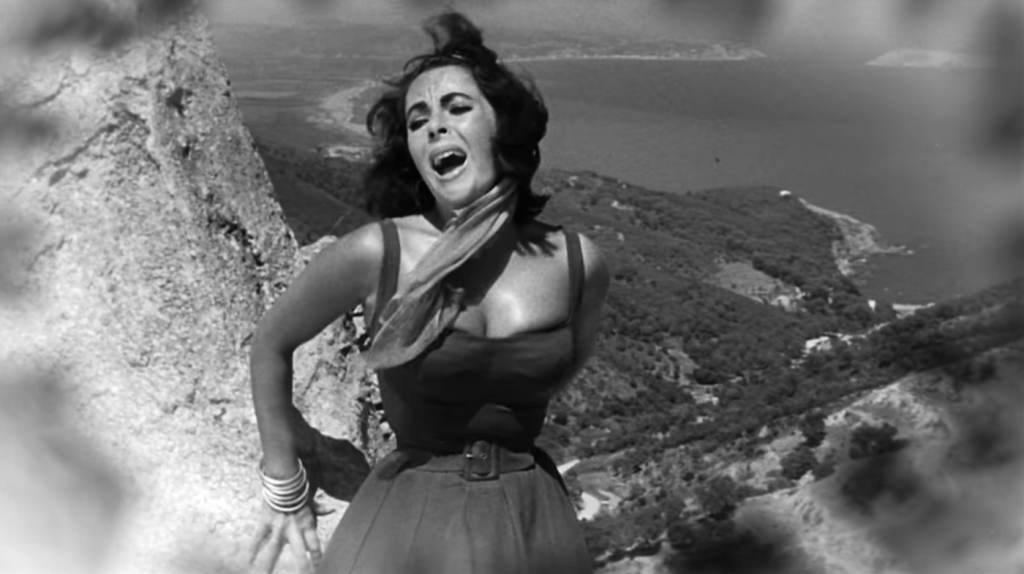
“Suddenly, Last Summer” is a 1959 Southern Gothic mystery film based on a play by Tennessee Williams.

The plot centers on a young woman (Elizabeth Taylor) who has witnessed the traumatic death of her cousin.

The dead man’s wealthy mother strenuously tries to suppress the truth about her son’s violent demise at the hands of cannibals.

The mother offers to finance a new hospital wing if only a surgeon will treat her niece (Liz Taylor) by lopping off part of her brain and erasing her memory of the day’s demonic events.

A wag would say it was a valiant, if misguided, attempt by the mother to instill the Zen ethos of non-conceptualization.

In Zen, non-conceptualization is equivalent to enlightenment.

Yet, these maternal movie machinations call to mind a persistent problem in the history of Buddhism: Does enlightenment come suddenly or gradually?

Tibet tried to solve the problem in 792. A Great Debate occurred at Samye Monastery to determine which method would be the more suitable path for Tibet to pursue.

Would it be the slow, gradual, tantric path practiced in India or the sudden path practiced by the Zen school in China?

Tibet selected the gradual path.

Even in China there was debate. The Southern school of Zen believed in the sudden path of meditation. The Northern school believed meditation was important but wisdom was also needed. The accumulation of wisdom takes time.

The Northern school eventually died out.

Today, all lineages of Zen believe enlightenment comes suddenly. As the founder of Zen Buddhism, Bodhidharma, once said, “Enlightenment comes in the blink of an eye.”

Which viewpoint holds the truth?

Time

Both views depend on an arbitrary conception of time.

Since forms are empty, then time is likewise unreal. So too the moment when “sudden enlightenment” takes place is also unreal. Truth is already in the mind.

Enlightenment is always with you. You can never lose it. Sure, you can let it get obscured by clouds of desire, fear and ignorance. But Truth is always beside you, within you. It is you!

Non-conceptualization does not require a lobotomy.

It only requires meditation.

If you didn’t reach enlightenment suddenly last summer, then try it gradually this autumn.

Whether you do it gradually by accumulating wisdom, or suddenly through a flash of intuition, the result is the same: a state of being.

Let it be, Liz Taylor. Let it be.

Freedom for Afghanistan?

Vol. 19. September 1, 2021

Freedom for Afghanistan?

The Taliban takeover of Afghanistan came faster than anyone expected. Elapsed time from the fall of the first provincial capital to the cave-in of Kabul was 9 days flat.

Why did Afghanistan collapse so quickly, like a house of cards?

Endemic corruption, a long history of dependence on foreign assistance and feeble roots in democratic government.

Despite 2400 American deaths, 2 trillion dollars in aid and 20 years of effort, America planted its seeds of democracy on rocky soil.

As Jesus said, “When the sun came up, the plants were scorched, and they withered because they had no root.” Mt 13.6

Afghan people, especially women and girls, cower in fear, facing an uncertain future. Will the new leadership govern with the dignity and holiness of the human person uppermost in their minds? Probably not.

Taliban commandeer Waheedullah Hashimi declared on August 18 — three days after the Islamic militant group swept the country — “There will be no democracy. We will not discuss what type of political system we should apply in Afghanistan because it is clear: It is sharia law and that is it.”

A chilling assessment, coming from a notorious regime.

Freedom is not valued by the Taliban, unlike America.

But what is freedom?

From a Buddhist perspective, we find a vision of freedom spelled out in the Puggala-Pannatti (“Designation of Human Types”).

“Cramping is the household life, a dusty path! Open and wide is the path of renunciation! The monk is chaste, refraining from sexual life. He rejoices in unity. He does not cause disunity.

“He is satisfied with clothes just enough to protect his body, with alms just enough to feed his stomach. He tortures neither himself, nor others. In this world he abides without yearning or desire.

“At peace, enjoying bliss, he lives with a self become god-like. He acts mindfully whether chewing or swallowing, sitting or standing — the Happiness which is Blameless!”

Ignorance

Ignorance is the mistake at the heart of life.

We think we’re happy when we have power and material wealth. We think we’re happy when we attach to life.

Attachment causes suffering.


One need not be a monk to be happy. One needs freedom.

Sink your roots deeply into freedom — freedom from desire.

If you desire nirvana, you’ll never find it.


Let go and nirvana will find you.


Even in Afghanistan.

We Did It Baby!

Vol. 18. Bonus Issue. August 1, 2021

We Did It Baby!

Milwaukee hasn’t felt this good in 50 years.

After waiting five long decades, Milwaukee Bucks fans everywhere tasted the sweetness of winning an NBA championship.

The ebullience was palpable. Tens of thousands of cheering fans packed the Deer District on the evening of July 20, then lined the city streets in jubilation for a celebratory parade two days later.

Milwaukee Bucks star and Most Valuable Player of the NBA Finals, Giannis Antetokounmpo told a giddy parade crowd assembled outside Fiserv Forum, “Milwaukee, we did it baby! We did it!”

Not since the days of Lew Alcindor, Oscar Robertson and the colorful play-by-play of announcer Eddie Doucette have Milwaukee Bucks fans felt such joy.

A half-century is a long time to wait to reach the heights.

Imagine waiting 500 years.

For the first 500 years of its existence, Buddhist enlightenment was reserved for orange-robed, barefoot monks.

Only those lucky few who have left home, family and property behind could attain spiritual salvation.

Even today, Theravada Buddhist enlightenment is not for us. It’s only for them.

But in the first few centuries of the Common Era, somewhere along the Silk Road, free from the 500 year fetters of “monk Buddhism” back in India, the Buddhist faith inhaled fresh air.

A new impulse was born. Lay people began to question, why is enlightenment reserved for orange-robed monks? Aren’t we eligible for enlightenment too?

Thus arose Mahayana Buddhism — “Big Ferry Boat” Buddhism.

It’s big because all of us — men, women, lay and ordained — can attain what the Buddha attained in his Great Awakening.

Mahayana Enlightenment

The basis of Mahayana enlightenment is the realization of “prajna,” enlightened wisdom: Form is emptiness, emptiness is form.

Anything you see, hear, taste, touch, smell and think of — including yourself — is a form.

What is emptiness?


Look around you. Look in the mirror. It is just these forms.


How wonderful that the human form can realize its essence!

Anytime you realize your essence, quite naturally you will be happy.

So, my friends, let the Mahayana achieve its victory.

Mahayana Buddhism won enlightenment for the little guy.

It feels good to finally win.

Not only a NBA championship, but also spiritual salvation.

We did it baby!

Wisdom from the Wide World of Sports

Vol. 18. August 1, 2021

Wisdom from the Wide World of Sports

All summer long, Buddhist wisdom has been oozing off the courts, out the gyms and from the pools of our athletes.

It’s time to shine the Buddhist spotlight on these pearls of wisdom and incorporate them into our own championship endeavors.

The basic message gets inflected, but the wisdom says the same: Stay in the moment.

Caeleb Dressel, 24, the world’s fastest swimmer, arrived at the 2020 Olympics in Tokyo with the pressure on him to win gold. Intense pressure can lead to trauma.

“Pressure is fine,” Dressel said. “It’s when that pressure turns into stress that it becomes a problem … It’s up to me whether I turn it into stress.”

After two furious laps, he won gold in the 100-meter freestyle in 47.02 seconds, an Olympic record and the fifth-fastest all-time.

Stay in the moment.

Simone Biles, 24, succumbed to pressure. She got lost midway through a gymnastic maneuver. She planned to do a 2 1/2 twisting vault, but her mind suddenly stalled after 1 1/2 twists.

“I had no idea where I was in the air,” she said. “I could have hurt myself … It’s honestly petrifying, trying to do a skill but not having your mind and body in sync.”

She stepped away from the competition to protect herself.

Not staying in the moment messes you up.

When Suni Lee, 18, replaced Biles as the favorite to win the women’s all-around gymnastic competition, she couldn’t sleep.

“If I’m being honest, I did not sleep very good last night,” Lee said. “I was just so excited. There was so much going through my head.”

How was she able to overcome her nerves, deliver the performance of her life and win the gold medal?

“I was just telling myself to breathe because in that moment I literally felt like I was going to puke, I was so nervous,” she said.

Stay in the moment.


Giannis Antetokounmpo, 26, polished that pearl of wisdom.

After an intense, pressure-packed Game 5 victory in the NBA Finals, the Milwaukee Bucks were one game away from winning the NBA Championship.

The Milwaukee Bucks star said: “We have to enjoy the moment, but the job is not done, we have to realize that. We’ve got to stay in the present …

“We’ve got to stay humble. We’ve got to be in the present and stay humble as much as possible. When this team is humble, this team is very, very dangerous. We play our best when we are humble.”

Then Giannis pronounced the sports quote of the decade:

“When you focus on the past, that’s your ego. When I focus on the future, that’s my pride. I try to focus in the moment, in the present. That’s humility, that’s being humble.”

Meditation wins the Moment

Meditation makes you humble. It puts you in a state of selflessness. When you meditate, you act humbly, without a self.


“You” are not there.


The only thing present is your skills, your actions, your breath.

Your ego is gone. Your pride is gone. Your nerves are gone.

Your True Self has a chance to shine through.

Athletes train for years, but their chance to win everlasting glory is reduced to a few minutes.

If those few minutes are clouded by egotistical concerns and polluted by self-centered thoughts, the athlete fails.

Fans don’t want to root for a self-seeking ego.

Fans wants to root for the True Self — because the True Self is what humanity shares in common.

Buddhism calls it the Dharmakaya, the Great Body of the Buddha.

When an Olympic athlete wins gold, we all win gold. When Suni Lee stands on the gold medal platform, we feel a twinge of happiness and shed a tear because that’s not Suni Lee, that’s you and me. That’s the quintessence of humanity.

In Buddhist meditation, as soon as one thought or sensation arises, we fall into dualism.

We lose our natural state of unity and peace.

We lose the moment.


Buddhism keeps it really simple:

Breathe deeply all the time.

Tranquilize.


Return to a state of unity.


Then all our actions will win gold.

Duck Boat to Identity

Vol. 17. July 5, 2021

Duck Boat to Identity

Shortly after the Declaration of Independence was signed, sealed and delivered to King George of England, Patrick Henry reflected on the consequences.

The Founding Father said, “The distinctions between Virginians, Pennsylvanians, New Yorkers and New Englanders are no more. I am not a Virginian, but an American!”

Before July 4, 1776, people living along the North Atlantic coast of the New World identified themselves as colonists of a loose coalition of united states. After July 4, 1776, we were Americans. 

Floating down the Wisconsin River in a duck boat over America’s birthday, gazing at the brown-tinted waves gently rocking the hull, I pondered this issue of identity. 

How did the Buddha identify himself?

He used to be a prince in his father’s kingdom, but meditation changes a person. 

When you get to see all things as waves rippling on the surface of the Mind, and understand that the waves belong to the depths of the Mind, then you’re happy because you’ve gained enlightenment. 

All things — you, me, the Wisconsin River — are waves rippling on the surface of the Mind. 

What do you identify yourself with: the ripples or the depths? 

Your true self is the bottomless sea. 

Your ego is a wave rippling on the surface of the sea. 

It’s temporary, short-lived, rarely at peace and as unreal as a dream. 

Your ego is an illusion. Don’t cling to an illusion. 

Bodhidharma never did. 

Bodhidharma

Bodhidharma was the founder of the Zen school.

One fine day, the emperor of China summoned the famous Buddhist monk to his court. The emperor was a devout Buddhist. He wanted to plump the depths of the monk’s wisdom. 

Face to face with the renowned monk, unsure if it might be an imposter, the emperor asked, “Who is this standing before me?” 

Bodhidharma said, “I don’t know.” 

In Zen, that’s the correct answer. 

(I mean, who are you? on a fundamental level?)

When you meditate, you are in a state of egolessness. 

When you stop meditating, you identify yourself with your ego, and all the misery it brings. 

This Fourth of July go one step further than Patrick Henry. 

Declare your true identity. Free yourself from the bonds of the ego. Live in the freedom of selflessness. 

Then ride the rippling waves like the Buddha you truly are.

This Year’s Commencement Speaker: The Buddha!

Vol. 16. June 8, 2021

Amy Poehler had a great opening line for a commencement speech. To a raucous crowd at Harvard in 2011, the comedienne said, “Friends, Romans and countrymen: Lend me your beers.” 

Steve Jobs was a bit more sober. For a commencement speech at Stanford in 2005, the Apple founder offered graduates this advice: “Your time is limited. Don’t waste it living someone else’s life … Have the courage to follow your heart and intuition.” 

At this time of year, many people are venturing forth to find their way in the world. Commencement means a beginning. 

For those beginning to embark on the spiritual path, there is no better commencement speech than one offered by the Buddha. 

In the Dharma-Chakra Sermon, the Buddha laid out the path to enlightenment: morality, meditation and wisdom.  

Be kind to yourself and others. Meditate. And realize that all things are impermanent, even yourself.

The core of the Dharma-Chakra Sermon is that desire causes our suffering. Desire is egocentric and selfish. As Jack Kerouac wrote,

Wanting, we get.
Getting, we lose.
Losing, we suffer.
Suffering, we die.

So, the Buddha tells us: Give up desire.

How? Practice morality, meditation and wisdom.

When we are kind to others, when we meditate, when we realize that all things are impermanent, suddenly, we are in nirvana.

Not wanting, we don’t get.
Not getting, we don’t lose.
Not losing, we don’t suffer.
Not suffering, we live in nirvana, if only for a moment.

One More Speech

On the unlikely chance, Harvard or Stanford would ask me to give a commencement speech, I would offer this simple advice: 

Whatever you do in life will end in suffering, except the Dharma. 

Follow the path of all Buddhas, dear graduates, and you will lead an extraordinary life just by being ordinary. 

Life is not a game to win or a problem to be solved. 

Life is a joy to be experienced. Experience the joy. 

You got your whole life ahead of you. Everything you do in life will end happily ever after, if it’s the Dharma you do. 

Love everybody no matter what — it’s hard to do, but it’s the only thing that is worth your while. And it’s the only thing that will last. Everything created will die. But love is eternal.

Hey Amy Poehler, let’s raise a glass to that. 

Spring Cleaning

Vol 15. May 8, 2021

When asked if she did any household chores like spring cleaning, comedienne Phyllis Diller put it this way. 

“Housework can’t kill you, but why take a chance?”

Yes, my friends, it’s that pesky time of year when we throw open the windows, vacuum the carpets, dust the shelves and clean the sheets. Winter dross, make way for Spring freshness. 

With a wife, daughter and cat, I find that a good deal of garbage tends to accumulate around our humble abode. I also find myself taking out the garbage frequently. 

Some days, I curse the drudgery. Other days, I do my duty robotically. Occasionally, I have a breakthrough.  

One morning I took out the garbage during a gentle spring rain. Soft raindrops pitter-patted on the driveway and the outdoor cans. I opened the lid, tossed in the family refuse, then paused.  

I looked up at the iron clouds floating by.

The raindrops felt soothing on the skin, relaxing as they splashed in puddles on the pavement. No one was around. No chipmunks. Not even a bird chirped in the rainy stillness.

I soaked in the simplicity. 

Then a saying from Zen master Huang-po popped in my head.

“Everywhere your foot may fall is a sanctuary for enlightenment.” 

The raindrops, the puddles, the garage, the garbage, the backyard, the whole scene including myself was at one with eternal reality. 

Take out the Garbage

Then it dawned on me. Take out the garbage in my head. 

In Zen, garbage was, is and ever shall be conceptual thoughts.

That other stuff in plastic bags is merely matter. 

That tuna can, those orange rinds, that cat poop, that rice bag, those shrimp shells — all that matter in its discarded “garbage” form isn’t me. But its essence is me. 

There is only One Universal Essence. Buddha-nature.

Nothing is me in its form. Everything is me in its essence, its suchness. 

Oh Suchness Ones, meditate and behold the beautiful Buddha world spread upon the earth. Stop meditating and behold the dream-crap of your mind. 

It’s the same stuff, the same matter, but how do you approach it?

If you look at garbage as “that dirty napkin,” “those old tennis shoes” — as concepts — you unleash a legion of demonic thoughts.

Observe them in their purity, and they are Buddha-nature.

Don’t let garbage fill your mind. 

Find freshness in the promise of right now. 

Spring freshness doesn’t exist in the moldy past or muddy future. 

Spring freshness exists in a mind free from conceptual thoughts. 

Adoration to the big, blank mind of the Buddha. 

Take out the garbage.

It won’t kill you, like housework.  

Cherry Blossoms

Vol. 14. April 9, 2021

In April 1896, the poet A.E. Housman took a carriage ride in a woodland park. He captured the beauty of the moment in verse.

Loveliest of trees, the cherry now

Is hung with bloom along the bough,

And stands about the woodland ride

Wearing white for Eastertide.

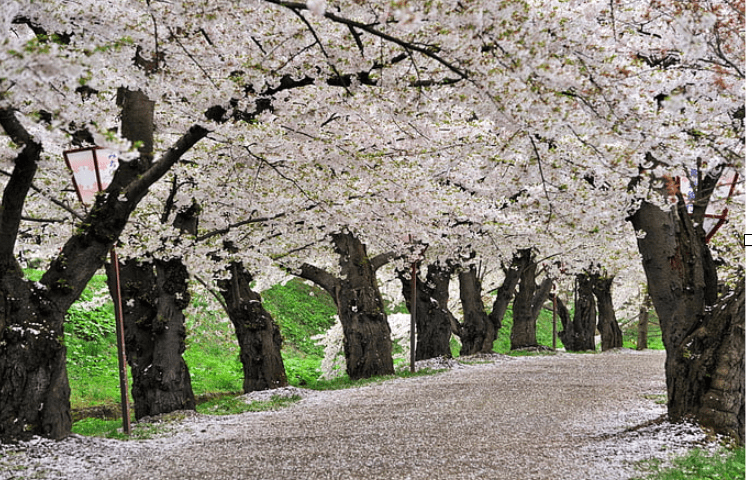
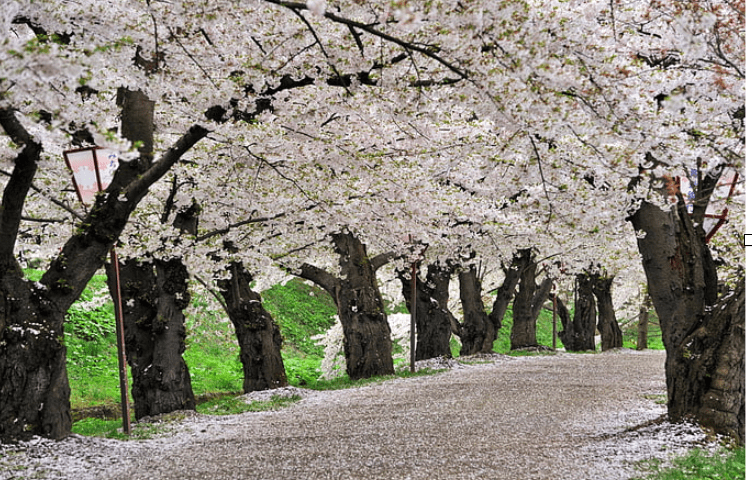
One hundred and twenty-five years later, on March 26, 2021, cherry trees in Shinto shrines across Kyoto came into bloom. This seemingly innocuous event is remarkable for many reasons.

Due to an unusually warm spring, the peak happened earlier than ever before. Even more remarkable is that the Japanese have been recording the date of cherry blossom peaks for the last 1200 years.

Ever since 812, when Emperor Saga sat on the Chrysanthemum Throne, the Japanese have recognized this flowery event as special.

But what is most remarkable is why the Japanese have been recording this event. It’s not to accumulate scientific data. It’s to celebrate the transient beauty of the moment.

Japan is a land steeped in Zen Buddhism. Zen dwells in the present moment. Zen opens us up to experience the here and now.

This cup of tea. This friend of mine. This laughter we share. That bug. This beautiful flower. To miss the moment is to miss life.

The fleeting beauty of the cherry blossom is a metaphor for life. It’s here today and gone tomorrow. Nothing lasts for forever.

When families, couples in love and kids of all ages flood the parks for hanami (“flower viewing”), they realize their joy is ephemeral. Life is as brief as a sunset. And as beautiful.

Carpe Diem

The moment is all we have. We don’t have to be a Shinto priest or a Zen master to behold the wonder of this transitory tick of time.

We can do it easily through meditation.

A.E. Houseman closed his brief poem with these lines:

Now, of my threescore years and ten,

Twenty more will not come again …

And since to look at things in bloom

Fifty springs are little room,

About the woodlands I will go

To see the cherry hung with snow.

Houseman was 70 years old when he experienced a Zen moment. It left him begging for 50 more years of the same.

My friends, why wait for a Zen experience?

The beauty of the moment is right before you.

Celebrate the timeless in a time called now.