My Cat Reached Enlightenment

Vol 41. July 19, 2023

Summer is a lazy time. And there’s no one as lazy as my cat. She sleeps an enviable 16 hours a day. But every morning when I sit down to meditate, without fail, she is at my side.

She scratches the chair, yawns, then affectionately rubs her body against my hands and legs, purring like a kitten.

Chu Chu has an almost preternatural sense. She could be snoozing in a closet or under a bed. Yet when I sit down in the Buddha chair, she comes right to my side. My cat is tuned into Zen.

Rubbing her tummy one morning, I realized — almost creepily — Chu Chu has reached enlightenment.

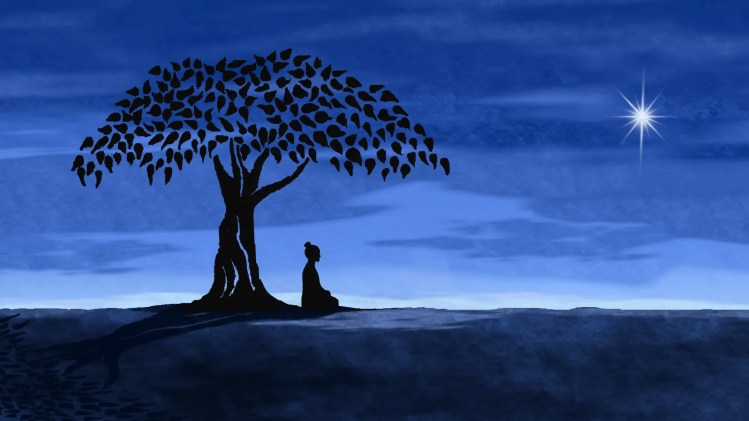
Meditation helps us reach the state beyond thought. As Japanese Zen master Dogen once said, “When you meditate, you are the Buddha.” When you meditate, you’re enlightened.

My cat is already there. She’s in that state way before me. What’s more, she never leaves it. Why? We need to look at epistemology.

Aristotle’s theory of knowledge is called the process of abstraction. He wondered how we go from seeing a flower to having a concept of a flower? How do we go from a material object to an immaterial concept of that object?

He explained the process this way.

Human beings receive sense data from our senses. We see a flower in a garden. Immediately our active intellect kicks in and abstracts a “phantasm” out of that sense data. The presence of a phantasm in our mind activates our passive intellect to create a concept.

This process is automatic. Like a vacuum cleaner, our intellect is busy all the time abstracting or sucking phantasms out of material objects and creating immaterial concepts.

“That’s a chair. That’s a desk. That’s a computer.”

This process separates men from beasts. We can’t stop the process, except through meditation.

Meditation puts the process of creating concepts on hold. Meditation calms our concept-forming mind.

Cats cannot form concepts. Cats take in sense data and stop right there. Meditators are like cats. We halt the process of abstraction. And when we do, we achieve enlightenment.

Chu Chu is already there, relaxing in the bliss of the beautiful Buddha world. Unbothered by ideas. Content with tummy rubs. At one with herself and the world.

Enlightened individuals relax too. They are not attached to forms. Forms are empty. There’s no need to think about them. And there’s no need to reject them.

When we give up our concepts, we gain a world of peace.

Achieve the sainthood of a kitten … yawn and purr.

After all, what else do you have to do?

Summer is a lazy time. Yawn and purr.

Man Versus Mouse

Vol 40. Summer Travel Issue. June 20, 2023

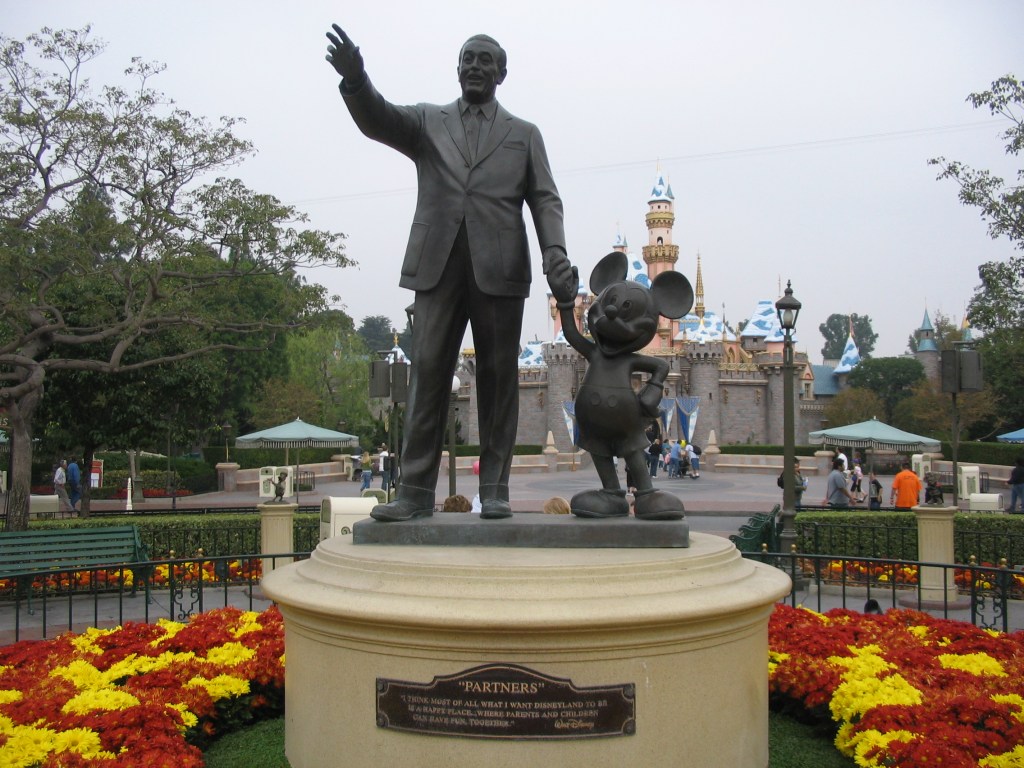
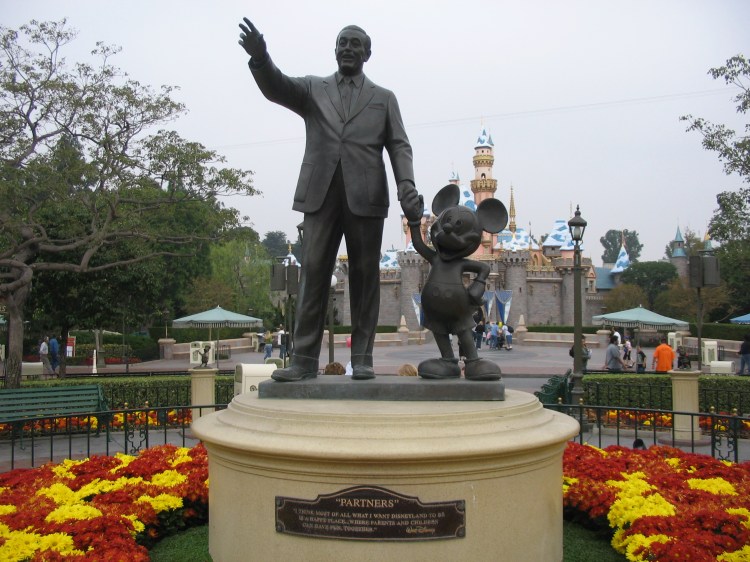
American animator, film producer and entrepreneur, Walt Disney instilled hope in the human heart. He once said, “All our dreams can come true, if we have the courage to pursue them.”

Disney was both an idealist and a realist. He made his dreams come true. His philosophy: “If you can dream it, you can do it.”

Today, Disney World is a dream come true for fans worldwide. Beloved by children of all ages, visited by 58 million people every year, it’s one of America’s top tourist destinations.

“It’s kind of fun to do the impossible,” Walt Disney said.

Why do so many people love Disney World? Why do so many people return again and again to the “Happiest Place on Earth?” What’s the magic behind the Magic Kingdom?

One word: Kindness. Disney employees extend loving-kindness to everyone they meet. Visitors get “high” off that unexpected, positive treatment. Many return annually for more goodness.

Oddly enough, loving-kindness is also the prevailing ethic of Buddhism. The technical term in the Pali language is metta.

Theravada Buddhist monks recite the Sutra on Loving-kindness (Metta-Sutta) every day. An excerpt:

This is what should be done by the wise,
the one who seeks the good and knows the meaning of peace.

Do nothing that is mean.
Do not deceive another, or despise anyone in any state. Do not, through anger or ill-will, wish anyone any harm.

Even as a mother watches over her child,
so with a boundless mind, cherish all living beings.
Radiate friendliness over the entire world, without limit. During all waking hours, establish this mindfulness of good will. It is called the highest state.

May all beings be happy and at their ease. May they be joyous and live in safety.

Mothers teach this sutra when they teach children to say the magic words. “Please” and “thank you” unlock the castle of kindness.

Growing up, we stop being polite. We get busy with self-centered agendas, and we end up living in the woods with the wolves. Buddhism says, “Come back to the Magic Kingdom.”

Walt Disney advises, “The greatest moments in life are not concerned with selfish achievements, but rather with the things we do for the people we love.”

Your family, your household, your place of work, your country — any place you visit — can be the Happiest Place on Earth as long as your prevailing ethic is kindness.

Human beings act kindly. Animals act selfishly.

In the game of Man versus Mouse, be a human being. Don’t reincarnate as a rodent, except for a rodent like Mickey Mouse.

Then, perhaps, all our dreams will come true.

Pandemic? What Pandemic?

Vol 39. May 21, 2023

On May 11, 2023, the US government declared the public health emergency ended. The Scourge of 2020 — the Invisible Terror — that had disrupted lives, decimated dinner tables and stopped the ever-rotating Earth dead in her tracks is officially over. 

The punishing pandemic pummeled populations, killing 7 million worldwide and 1.1 million in the United States alone. Despite the fact that covid still kills hundreds of people per day in America, after 39 months, the Modern Day Plague is officially kaput. 

The long-awaited announcement went largely unnoticed. 

People kept going about their daily lives as if nothing had changed. There was no dancing in the streets. 

This blasé attitude brings up an interesting question: Do official declarations matter? Do designations change anything? In a wider sense, do words really signify reality? Do random phonemes, silly syllables and sophisticated human speech mean anything?

Buddhism thinks not. 

On the morning of his enlightenment, right after he attained unexcelled awakening, when he was finally able to put his insight into words, the Buddha proclaimed, “This cannot be taught.” 

It’s too subtle. It’s too profound. It cannot be put into words.    The tongue cannot go there. “This cannot be taught.” 

Immediately the devas, the gods and goddesses in heaven, rushed down. With palms pressed together, they implored, “World Honored One, for the sake of humanity, to relieve human suffering, we beseech thee, please, teach!” 

The Buddha, seeing their point, relented. He said, “Fine. For the sake of humanity, I will teach. But what I teach is not Buddhism. What I teach is the path to Buddhism. I am just a finger pointing at the moon.” 

In meditation, one realizes that words are unnecessary. 

There is only the common, original bliss-stuff. 

If there were only a better name for it … The Dharmakaya … Thatagata … BLAH!  … The What-all … BlooBleeBlop … 

As the Tao Te Ching says, “The name that can be named is not the eternal name.” 

If you can talk about it, you’re not there yet.

A Prayer

Oh Lord Buddha, you have enlightened us. You have untangled the tangle. You have disenchanted us of “reality” to reveal Reality.  

It’s not that we don’t know, but that we cease knowing. 

Adoration to your big, blank mind.

Samadhi is ecstasy.

Not words, but the compassionate Buddha.                         

Not pandemics, but the compassionate Buddha.            

Not jubilation, but the compassionate Buddha.                 

Amen

Billionaires in Nirvana

Volume 38. April 24, 2023

Like a wolf at the door, tax season bit us. No one was happy, not even the accountants. Most tax-filers ground their teeth, stifled resentments and ponied up the dough. Great minds throughout history put in their two cents worth.

Benjamin Franklin was resigned: “In this world nothing is certain but death and taxes.”

Albert Einstein was confused: “The hardest thing in the world to understand is the income tax.”

George Harrison was irritated: “Let me tell you how it will be. There’s one for you, nineteen for me. ’Cause I’m the taxman. Yeah, I’m the taxman.”

Perhaps only Oliver Wendell Holmes had an enlightened attitude: “I like to pay taxes. With them, I buy civilization.”

Buddhism agrees. There’s no reason to attach to money because we are billionaires — billionaires in nirvana.

Without doing anything, right where we sit, with empty wallets, we are rich and self-sufficient. The poor people of this world are the Elon Musks, the Jeff Bezoses and the Vladimir Putins.

Attached to material things, rabid dogs ignore to their peril the first Noble Truth of the Buddha: Attachment causes suffering. True wealth consists of being kind to others, meditating and realizing that all things are impermanent, even one’s ego.

We live in one vast appearance of emptiness, an endless illusion. Everywhere is One Great Flower, One Grand Light, perfect without end. One Great Secret Smile lies behind it all.

Everlasting bliss is always here. We cannot escape it. The Great Order of the Buddha’s Body — the Dharmakaya — is all around and infinite. We close ourselves off to it through attachment.

Yet, when we meditate, we let go of attachment to people, to places, to things, to thoughts, to money, to egos. We see things in their pristine purity. We behold the Oneness behind creation.

Enlightenment is not something we attain. We already have it.

We simply open ourselves up to it through detachment.

Meditation is internal work. Meditation values deceleration.

Meditators are students of inactivity. They slow down.

There’s no reason to rush through meditation, and every reason in the world to slow down.

Be as dead to the world as a tree stump.

The world despises meditation.

But what is the world, except a world of sorrow?

Internal work is not really work at all. It’s play.

It’s time to go to the playground and play.

Don’t worry another minute.

After all, tax season is over, and you are a billionaire.

A billionaire in nirvana.

Let the Good Times Roll!

Vol. 37. March 18, 2023

March Madness. St Patrick’s Day. Daylight Savings Time. Robins Returning. The Vernal Equinox. There’s no denying it. Spring has sprung. It’s a compelling time for poets.

Alfred, Lord Tennyson warns us from Locksley Hall, “In the Spring, a young man’s fancy turns to thoughts of love.”

Jimi Hendrix sings exuberantly:


People talkin’ but they just don’t know,

What’s in my heart, and why I love you so.

I love you, baby, like a miner loves gold.

Come on, sugar, let the good times roll!

Japanese haiku master Basho is a bit more tame:

“Sitting quietly, doing nothing, Spring comes and the grass grows by itself.”

How can we turn these happy, green times into Buddha times?

Easy. Meditate.

Spring reminds us of the futility of fretting, the agony of anxiety.

Why be a worry wart when the world is so beautiful?

Meditation brings us to the beauty of the moment.

God made time, but Man made haste.

Zen master Hakuin (1686-1769) would advise us to slow down and listen to the sound of one hand clapping.

When we step outside the relentless pounding of our thoughts, then we hear the sound of One Hand.

Without hearing this wondrous, unborn, deathless sound, life is still worth living, but it never rings true.

We use words to be free of words, until we arrive at the Wordless.

We use thoughts to be free of thoughts, until we arrive at No-Thought.

We use the self to be free of the self, until we arrive at No-Self.

If we don’t understand in this manner, and go on sleepwalking, we make matters worse for ourselves. Moreover, we slander the Buddha. This is not practice.

To not abide in conceptual reasoning, to let the world be, as it is, this is true practice.

Enlightenment is not something separate from meditation. It is meditation!

Simply put, to meditate is to be a Buddha.

This spring, to hear the sound of One Hand, listen to the happy chuckle of a robin.

And when we hear it, then we too can let the good times — the Buddha times — roll.

Back to the Garden

Vol. 36. February 18, 2023

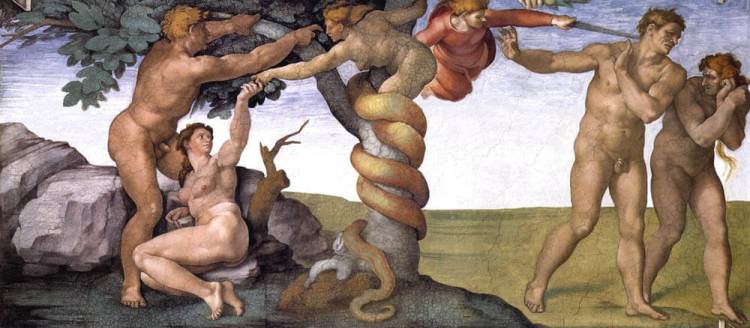
In the Book of Genesis, God cursed the Snake saying, “On your belly you shall crawl all the days of your life.”

To the Woman he said, “In pain you shall bring forth children.”

To the Man he said, “By the sweat of your brow you shall eat your bread. Thou art dust and unto dust thou shalt return.”

They were cast out of the Garden to a land east of Eden.

And no one lived happily ever after.

The Fall of Man in a dramatic story. It vividly depicts how human beings left a state of unity and entered a state of duality. This rich story can be interpreted on many levels.

In Taoist terms, humans abandon the mystery of the eternal Tao for its manifestations. In psychological terms, humans leave a state of infantile dependence on a father god to forge a heroic destiny on their own. In Buddhist terms, we leave the bliss of nirvana for the sorrows of samsara.

According to the Madhyamaka school of Buddhist philosophy, when we are cast out of the Garden of Eden, we ignore absolute truth and embrace conventional truth.

Conventional truth holds you are you, and I am I. We live our lives separately, distinctly, according to our self-centered desires.

Absolute truth proclaims all things are empty.

You and I, at a fundamental level, are nothing. Our true self is an absence of self.

The Buddha taught, “All things are impermanent. All things are without a self.”

Most people don’t want to accept absolute truth. We prefer the sorrows of samsara. We chose to live life on a conventional level.

Once in a while, however, we like to be reminded of fundamental truth. We see this reluctant acceptance of absolute truth very powerfully on display every Ash Wednesday.

On Ash Wednesday people wait in long lines to receive ashes on their foreheads. They listen to the minister repeat the words: “Remember: Thou art dust and unto dust thou shalt return.”

Ash Wednesday is the single largest attended church service of the entire Christian liturgical year. Churches are bursting with people, even more than on Christmas and Easter. Why?

We know the truth of emptiness in our hearts. But we need that stark fact affirmed in the comfortable setting of other people.

We don’t want to accept we’re empty. We identify with our egos. I am Joe Schmo of 372 Evergreen Terrance. I have these degrees, these kids, and this big fat bank account. That’s me!

But is that really you?

Our true self is an absence of self.

The Buddha woke up to this truth, and we can too, any day of the week.

Egoless-ness is the Redemption of Man.

And a cheap ticket back to the Garden.

All is Quiet on New Year’s Day

Volume 35. January 22, 2023

After the hoopla of Times Square, after the ball drop, champagne, and fireworks, there is the silence. The clean slate. The New Year.

Seminal Irish rock band U2 sing about this season in their aptly named song “New Year’s Day.”

All is quiet on New Year’s Day. A world in white gets underway. I want to be with you,
Be with you, night and day
.

The song continues:


It’s true, it’s true. We can break through. Though torn in two, We can be one.

About whom is Bono, lead singer of U2, singing?

Obviously, his beloved.


In a Buddhist sense, however, he is alluding to our true self.

Our hearts yearn for unity. We long for oneness.

But the sullen waves of samsara care not. They toss us to and fro. We whimper in the ocean of duality, wallowing like whales between gain and loss, joy and grief, until we’re seasick.

Where can we find safe harbor? An island paradise perhaps?

Turn to the quiet mind, the mind unattached to form.

Meditation returns us to harmony. To our simple, original, uncomplicated, natural state. Meditation restores our primal unity.

The ground of our being is a mysterious peaceful joy.

Tranquility is our natural home.

Meditation brings us home.

The New Year is a time of prajna — what something is in itself, unpolluted by judgements or agendas. Declutter the calendar. Now is the time to behold the beauty of a new born world.

When the mind is at rest, the world is at rest.

Wandering waves, joyless and gloomy, beneath brown bridges in Brooklyn, sulk like sad men at crowds in Times Square.

Buddhas return to the dazzling blankness of a mind free of thoughts.

U2 end their song, with a plea: “I will be with you again.”

Bono sings the words over and over until fade out.


“I will be with you again … I will be with you again …”

Who will you be with this new year?

Time is limited. Your true self is infinite.

Have Yourself An Ear Worm Christmas

Volume 34. December 20, 2022

In those immortal words of Buddhist wisdom sung by Christmas crooner Andy Williams:

“It’s the holiday season (the holiday season).

So whoop-de-do and dickory dock

And don’t forget to hang up your sock

‘Cause just exactly at twelve o’clock,

He’ll be coming down the chimney, down.
(He’ll be coming down the chimney, down.)

He’ll have a big fat pack upon his back

And lots of goodies for you and for me.

So leave a peppermint stick for old St. Nick

Hanging on the Christmas tree!

It’s the holiday season …

Help! I can’t get that song out of my head! It’s an ear worm.

An ear worm is a catchy piece of music that continuously occupies a person’s mind even after it is no longer being played.

During the holiday season (whoop-de-do and dickory dock, and don’t forget to hang up your sock … help me!), ear worms are played perpetually on the radio.

How do we get rid of an ear worm? Besides suicide?

Turn to Buddhist wisdom. (Meditation won’t help. I’ve tried.)

Nagarjuna, a second century Mahayana Buddhist thinker, posited the two-truth theory: conventional truth versus absolute truth.

Conventional truth is the world of form. You are you. A cat is a cat.

Absolute truth is the world of emptiness.

Nagarjuna holds that conventional truth is absolute truth.

How can that be so? How can something be real and yet empty?

He points to the Heart Sutra. This Mahayana sutra proclaims the perfection of wisdom: form is emptiness, emptiness is form.

The ground of reality is emptiness.

The historical Buddha teaches that since the world is an empty illusion, don’t attach to it. Attachment causes suffering.

The Holiday Season song by Andy Williams is conventional truth. It’s a snappy, feel-good, sing-along song. The happy world of form. Yet, in an absolute sense, it is as empty as the rest of us.

Suffering consists in clinging to what is ultimately unreal. The world is a persistent illusion, a garden of earthly delights. Suffering is clinging to this continuous feedback loop of catchy forms.

Finally, that song is out of my head.

Oh no!

“Chestnuts roasting on an open fire …”

Agh!

Thanksgiving Buddha-style

Volume 33. November 22, 2022

Thanksgiving is upon us. At this time of year when the leaves have fallen from the trees, and before we tuck in for a long winter’s nap, our minds turn to the simple blessings of life.

Good food, secure homes, being happy in our ways.

Gratitude is a trait among cheerful people. You won’t find gratitude in Mr Scrooge. He lacks an appreciation for kindness.

The Scrooge inside us might need a lesson in thanksgiving.

In the Pali language, the word for gratitude — kataññu — literally means “to have a sense of what was done.”

The Buddha picks upon this notion when he says, “There are two people hard to find in this world. The one who does a kindness, and the one who is grateful for a kindness done.” (AN 2.118)

In Buddhist understanding, a valuable step in learning gratitude is to give thanks for our parents.

In the Sutra on Gratitude, the Blessed One says, “I tell you, there are two people who are not easy to repay. Your mother and father.

“Even if you were to carry your mother and father on your shoulders for 100 years, you would not repay them.

“Why is that?

“Mothers and fathers do so much for their children.

“They care for them, nourish them, introduce them to the world.

“Mothers and fathers are your first gods and your first teachers.

“They are worthy of our gifts.

“The wise pay them homage.

“Give them food and drink, clothing and bedding.

“Anoint them, bathe them and wash their feet.

“Performing these services, the wise are praised right here, and after death they rejoice in heaven.” (AN 2.32) (Iti. 106)

A few years after my mom died, I was sitting in church listening to a priest give a homily. He must have been over 80 years old. Looking back on his life, he concluded the one thing for which he was most grateful wasn’t God. It was his parents.

That homily hit home.

No one gets to choose their parents. They’re a gift from God.

But we can be grateful for them.

The Blessed One says, “A rude person advocates ingratitude. Whereas, a polite person advocates thankfulness.” (AN 2.32)

If you’re ready to show appreciation for the kindnesses done to you in your life, and if you’re ready to return those kindnesses to other people, you’re ready for Thanksgiving.

Gratitude, integrity, thankfulness — lessons Mr Scrooge never learned at his mother’s knee.

Turning to Cold Mountain

Volume 32. October 17, 2022

Han Shan (“Cold Mountain”) was a Chinese Buddhist figure associated with a collection of poems from the Tang Dynasty.  When he lived, who he was, and whether he existed is a mystery.

Apparently, he lived alone in an empty cave on Cold Mountain, following the Way, harmonizing with the eternal Tao, meditating. He spent his days in seclusion and simplicity, writing poems. 

Here is a sample of his work:

In my house there is a cave,                                                               

and in the cave is nothing at all —                                                   

pure and wonderfully empty,                                                 

resplendent, with a light like the sun

A meal of greens will do for this old body,                                          

a ragged coat will cover this phantom form.                                      

Let a thousand saints appear before me —                                          

I have the Buddha of Heavenly Truth.

Buddhism is an attempt to describe the Indescribable, to tell the Untellable, to fathom the Unfathomable, to say the Unsayable. Buddhism is a realization of Oneness. 

But beware of making Oneness an idea. It’s not something that can be rationalized, compartmentalized and categorized. 

Oneness is a reality that can only be experienced, intuitively, for each individual by himself or herself. 

Once a student said, “I’ve been reading that Jesus and Buddha were enlightened individuals, but their enlightenment was different.” 

That’s impossible.

Perhaps their expression of enlightenment was different, but not the actual experience. 

Enlightenment is a sudden, tacit understanding of the non-dual nature of reality. 

Oneness is One, not Two.  

That student was under the impression that in meditation something happens. You magically morph from monster to master. Meditation somehow transforms titmice into titans. 

The truth is, in meditation, nothing happens. 

In meditation, one realizes the Wallpaperness of Whatever-Is-Before-Your-Face, the Actual Sameness, the Perpetual Potential,  the Golden October Radiance, the This-Cannot-Be-Taught-ness.”

Words cannot go there. The tongue cannot touch it. To pollute Prajna with thoughts and labels and categories is to slander it.

The world is full of noise. Silence is the perfect sound.

If you want suffering, there’s plenty more where that came from. 

But in Buddhism, boredom is bliss. 

Someday, it will all end up on Cold Mountain, like Han Shan, in silence, in simplicity, in radiance, in bliss … in Oneness. 

And when that happens, despite whatever religion you follow, you too will have the Buddha of Heavenly Truth.